Finding Kino - 60th Anniversary
Discovery of Kino's Grave and Skeletal Remains
Facebook Blogs 2025-2026
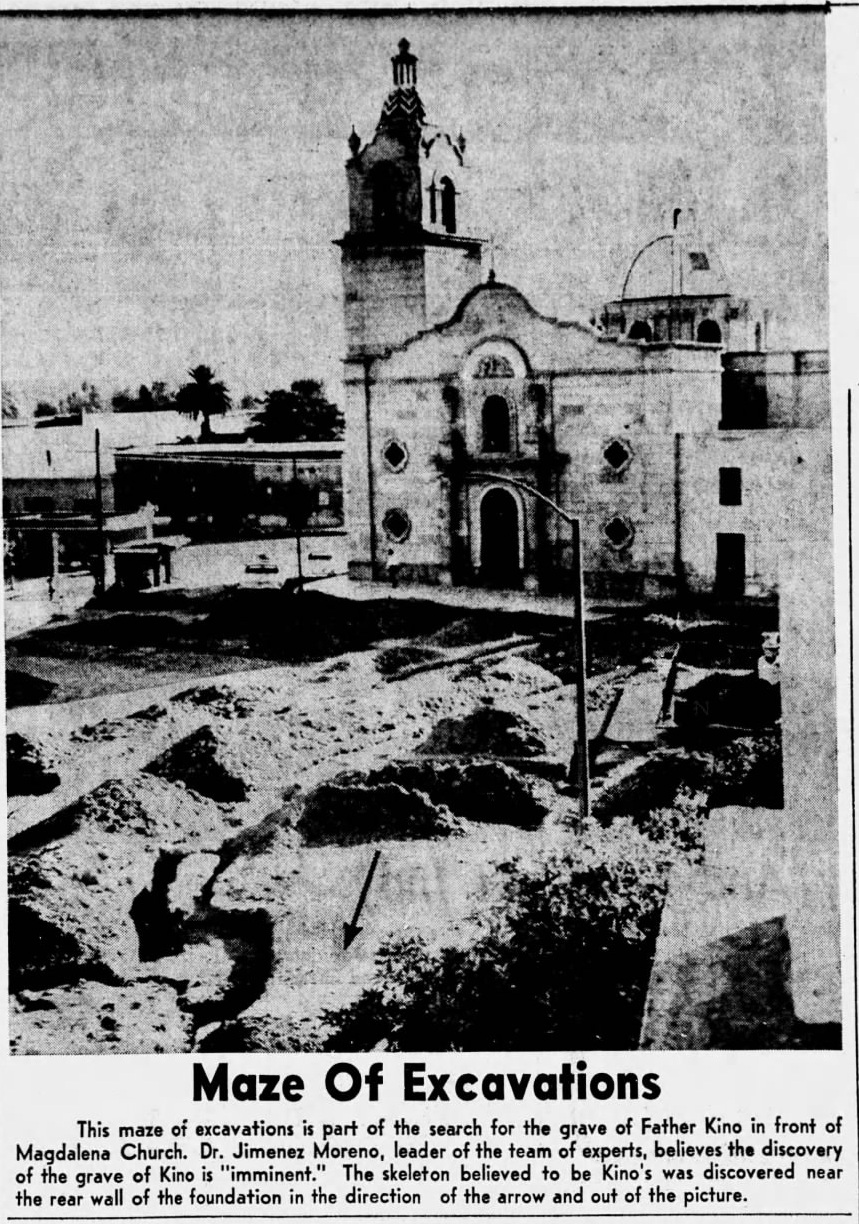
Arrow Points To Kino Grave Site
Tucson's Arizona Daily Star Newpaper, Front Page, May 25, 1966
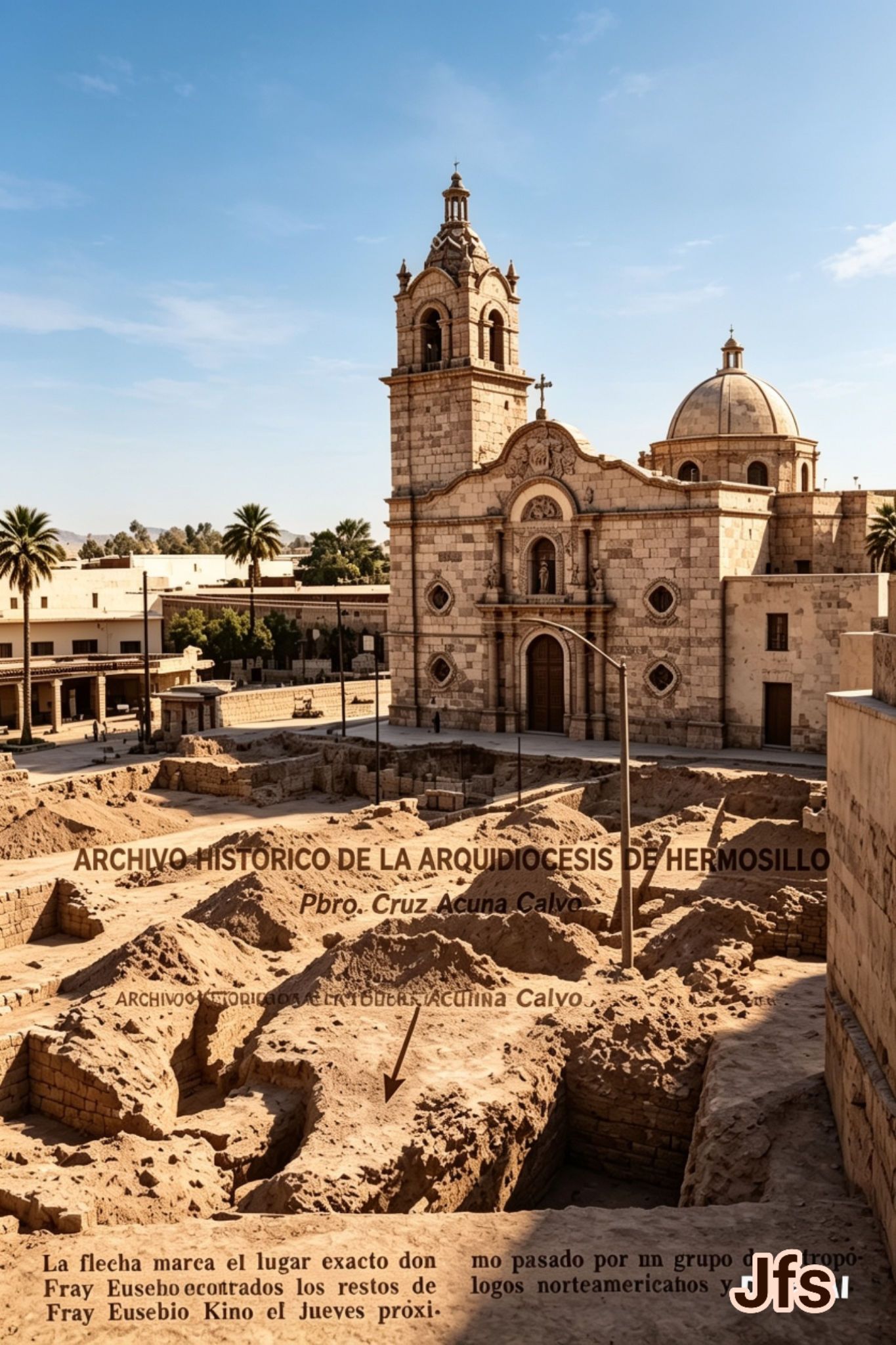
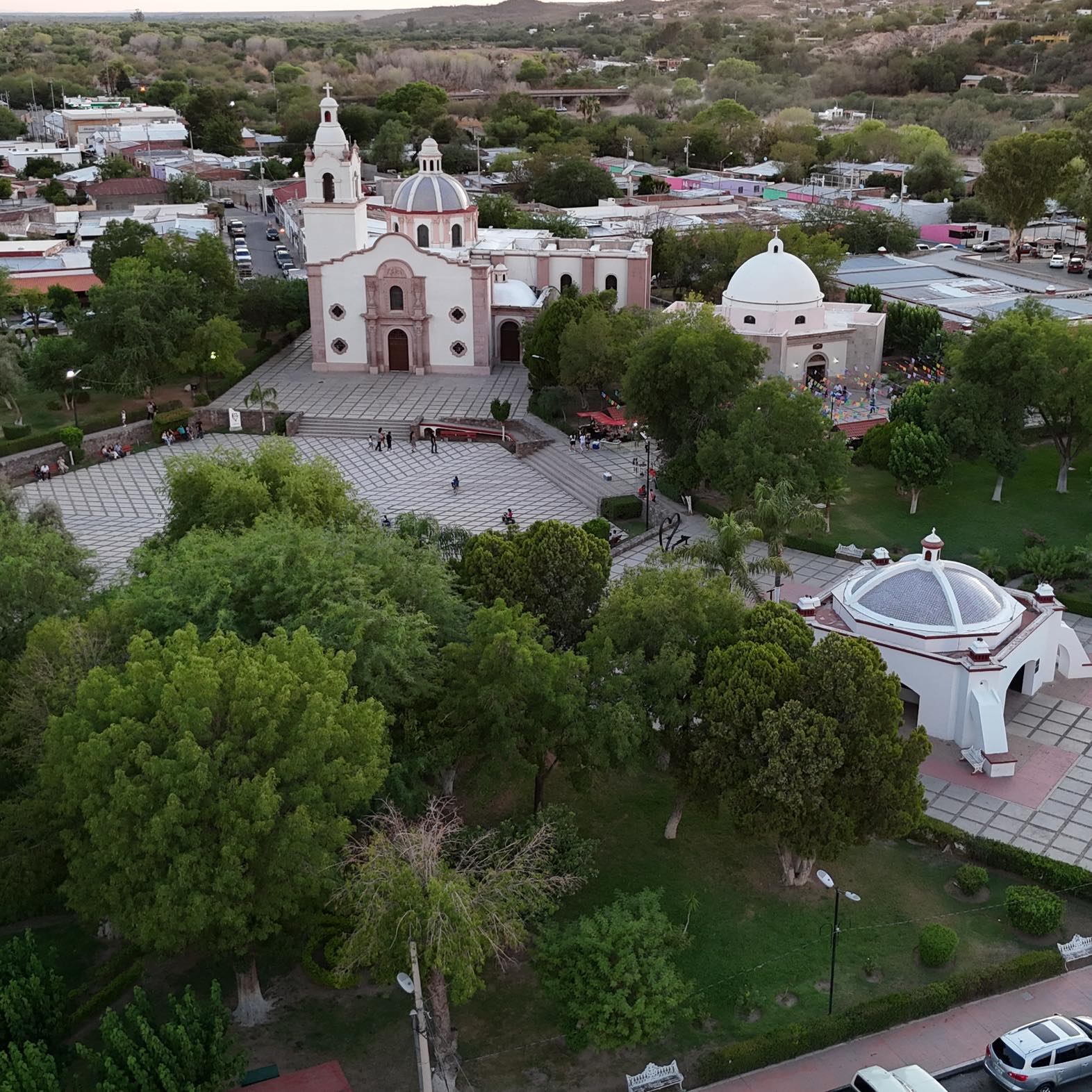
La Plaza Monumental
Padre Eusebio Francisco Kino
National Monument of Mexico
Magdalena de Kino - 2026
Top Left To Bottom Right
Santa Maria Magdalena Church (1820)
San Xavier Chapel (2011)
Kino Mausoleum (1972) - Kino's Grave
To Go To Kino Grave Discovery Site History (page1), click
Grave Discovery Site History Page
To Go Kino Grave Discovery Olvera Account (page 3), click
Grave Discovery Olvera Account Page
To Go To Magdalena de Kino - Trails Ends, click
Magdalena de Kino - Trails End Page
To Go To Kino Grave Discovery Chapel (page 2), click
Grave Discovery Chapel Page
To Go To Finding Kino-60th Anniversary
click, Finding Kino Blog
Major Page Sections Links

Then Existing Kino Chapel Dedicated to the Great Jesuit Missionary Francis Xavier
with Present Day Magdalena Church in Background
1879 Drawing by Alphonse Pinart
Kino's Grave Uncovered Within The Chapel's Buried Foundations - May 19, 1966
Facebook Blogs For 60th Anniversary of Finding Father Kino
Finding Father Kino Facebook Series - Celebrating The 60th Anniversary of Finding Padre Kino’s Grave and Skeletal Remains in Magdalena de Kino, Sonora.
xx
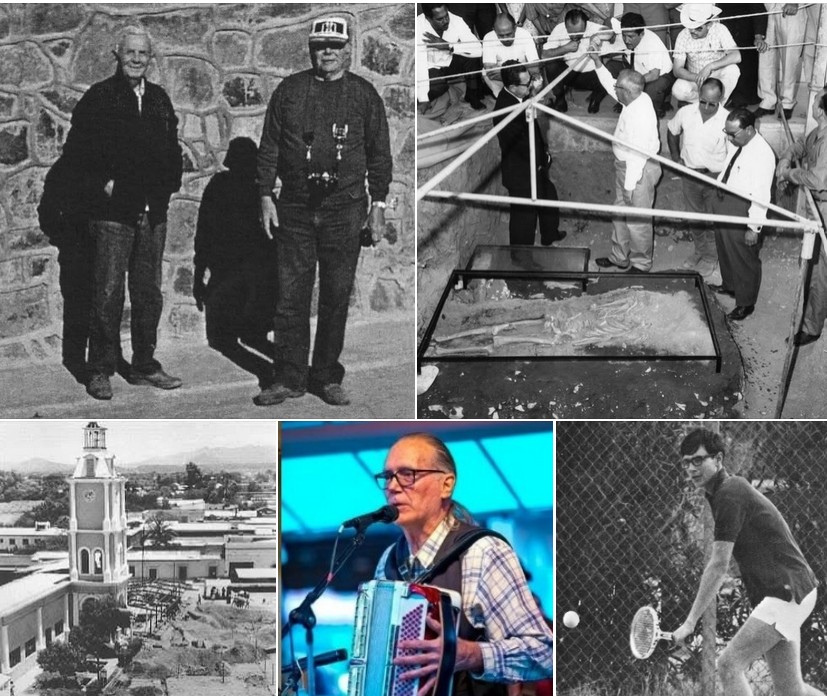
Finding Kino - 60th Anniversary. Young Bobby Ronstadt's Trip to Kino Grave Discovery in May 1966. Since the death of Bobby Ronstadt (1953-2025) two months ago, I have been thinking about the importance of the 2025-2026 observance of the 60th anniversary of the discovery of Padre Kino’s grave and skeletal remains. The discovery caused great excitement in 1966 and the anniversary is very important now because most people who lived during the time of discovery have died.
Bobby told me that his father Ed Ronstadt took him to Magdalena from their home in Tucson within a day or two of the discovery of Kino’s skeleton. Ed Ronstadt wanted his son to personally witness this great and long anticipated historic event. Ed Ronstadt’s friend, Jim Murphy, also took along his son Rick Murphy. Rick died in 2013. Ed Ronstadt and Jim Murphy wanted their thirteen year old sons to pass on the story of this extraordinary archeological discovery made in May 1966 to the next generations so the true story would not be forgotten nor distorted.
Ed Ronstadt and Jim Murphy were what would now be called “civilian diplomats.” Ed and Jim promoted borderland friendships through the promotion of the shared history and culture of the borderland states of Sonora and Arizona by tours of Padre Kino’s missions and their leadership in many historical and cultural organizations in Arizona. Ed and Jim made a major contribution to preserving the history of the Kino grave discovery. They helped Jorge Olvera, one of the leading archeologists, in the publication of Jorge’s book "Finding Father Kino: The Discovery of the Remains of Father Eusebio Francisco Kino, S.J. 1965 -1966" that was later published in Spanish as - “Econtré los restos ye el espíritu de Kino: Mi diario de campo 1965-1966.”
Ed Ronstadt edited the remembrances of his father Fred Ronstadt (1868-1954) in the book "Borderman: Memoirs of Federico José María Ronstadt." In 1882, Fred's parents moved to Magdalena and bought a house there. Later Fred moved to Tucson from Magdalena at age 14 to learn a trade, becoming a prominent businessman and civic leader in Tucson.
Throughout the months of 2025 and 2026, I will be posting stories about the extraordinary history about the discovery of Padre Kino’s grave and the multitude of people in Sonora and Arizona who joined in the discovery effort. The Kino grave discovery story is as suspenseful and compelling as any great detective story with a lot of humor added and is one of the more astonishing stories in Kino’s 300 year plus historical legacy.
Bobby’s memorial service will be held this Saturday May 31, 2025, at St. Thomas the Apostle Church, 5150 N. Valley View Road Tucson, Arizona, at 10:30 am. See Bobby’s obituary at https://www.carrillostucsonmortuary.com/.../robert-ronstadt. (Robert G. Ronstadt 1953-2025) Dear Bobby, as you join Padre Kino on the trail, "May the angels lead you into paradise ... may you have eternal rest." We miss you and your graciousness that you showed to all you met. You more than left your mark on Tucson's music community with your music, song and generosity. Bobby's latest album "In to the Black" will soon be posthumously released.
Photos: top left: Edward F. Ronstadt (1916-2001) and James M. Murphy (1917-1997); top right: Kino’s skeletal remains; lower left: Kino’s grave site and the City Hall of Magdalena; lower center: Bobby Ronstadt (1953-2025) playing the accordion, one of the many musical instruments that he played during his performances that featured songs that he wrote; lower right: Rick Murphy (1953-2013) returning service on Salpointe High School's first Arizona state men's championship tennis team.
_________________________
Read online Jorge Olvera’s account and other accounts about the extraordinary history of the discovery of Padre Kino's grave with its skeletal remains on May 19, 1966 - 59 years ago. ....
Finding Kino - 60th Anniversary
May 29, 2025
https://www.facebook.com/eusebio.kino.56/posts/pfbid0BCpgdYUhc8dBDG34zoE6ZmG3zp82bym3VDhuTJXdSUowQSTKBu6e4ny3EPn53H5El
xx
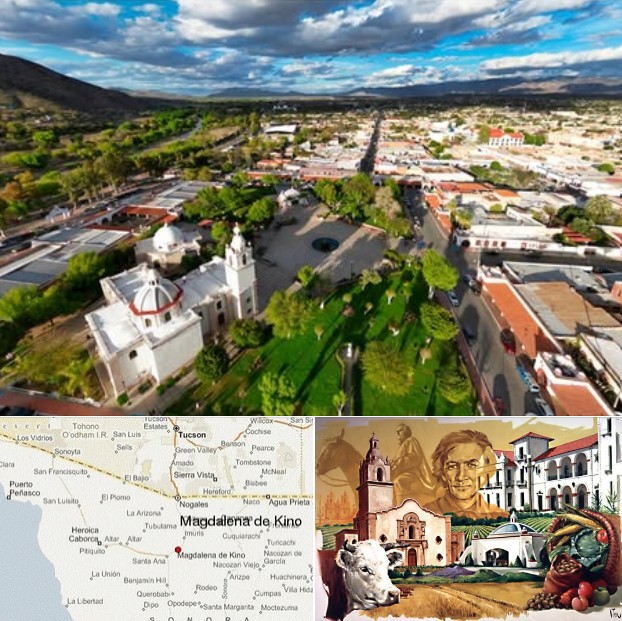
Finding Kino - 60th Anniversary. ¡Viva Magdalena de Kino! On June 26, 1968, two years after the Kino grave discovery, the name "City of Magdalena" was officially changed to the "City of Magdalena de Kino" by Law 29 enacted by the state legislature of Sonora. The people of Magdalena celebrate the addition of "de Kino" to their community's name honoring a Hero of Mexico - Eusebio Francisco Kino - the great pioneer Jesuit missionary and explorer.
As Raul A. Millán of Magdalena de Kino wrote yesterday on Facebook “... el legado del padre Kino merecía ser recordado no solo en los libros, sino también en el propio nombre de esta tierra que tanto amó y donde encuentran sus restos mortales.” [... Father Kino's legacy deserved to be remembered not only in books, but also in the very name of this land that he loved so much and where his mortal remains are.]
To read Raul’s entire Facebook post, see https://www.facebook.com/cesararturo.andrade.5/posts/pfbid0K2qRuxrYVGqQyCPxewpjxpL1NzasKxDmDT8x8YK8UYBjrjCc9tV8zmzLTebHsZdjl
Kino died in Magdalena while dedicating a chapel to his patron saint Francis Xavier at age 66. The site of Kino's grave is now protected by a mausoleum where his skeletal remains are displayed. The mausoleum and its plaza is a national monument of Mexico.
It is a beautiful drive of less than an hour south from Nogales, Arizona to reach the enchanting community of Magdalena de Kino with its friendly and hospitable people numbering 30,000.
The next day trip tour of Magdalena de Kino from the United States by Alex La Pierre of Borderlandia will be on Wednesday, October 1, 2025 from 8 AM to 4 PM. More information is at https://www.borderlandia.org/shop/p/magdalena-daytrip ("Borderlandia Magdalena de Kino Day Trip"). There are several other Borderlandia Magdalena de Kino day tours scheduled throughout the year.
Throughout the months of 2025 and 2026, I will be posting stories about the extraordinary history of the discovery of Kino’s grave and the multitude of people in Sonora and Arizona who joined in the discovery effort.
¡VIVA MAGDALENA DE KINO!
Finding Kino - 60th Anniversary
June 25, 2025
https://www.facebook.com/eusebio.kino.56/posts/pfbid0Gip6biFN8FWUFyuqcnp3oCaqnwCc4k5aMwQZYjhpa6N3g5TrkxEsPJyvJe1zPeYyl

Reflexiones De La Peregrinación A Magdalena De Kino 2025
Gabriel Ruiz - Documentary Producer, Videographer and Pilgrim
Pilgrims Walk 63 Kilometers (40 miles) From
Kino’s Mission de Nuestra Señora del Pilar y Santiago de Cocóspera
The Essence of The Worldwide Phenomenon of Pilgrimage Is Revealed In The Beautiful Video “Reflexiones De La Peregrinación A Magdalena De Kino 2025” [Reflections On the Pilgrimage To Magdalena de Kino 2025] Created By Documentary Producer, Videographer and Pilgrim Gabriel Ruiz. Gabriel and his and fellow caminantes made the Magdalena Pilgrimage by walking 63 Kilometers (40 miles) from Kino’s Mission de Nuestra Señora del Pilar y Santiago de Cocóspera through Ímuris to Magdalena de Kino. See the Pilgrimage Reflections video at https://www.youtube.com/watch?v=LvwCxky09cQ
The 6 minute Pilgrimage Reflections video is in Spanish with English subtitles and has scenes of some of Sonora’s most beautiful country along its canyons through the oak and juniper covered mountains of Highway 2 and its agricultural oasis valleys along Highway 15 to Magdalena de Kino.
What I liked most about the video is that Gabriel Ruiz recognizes the many people who travel great distances from their homes to support the pilgrims along the pilgrimage routes with food and water, medical care and encouragement. Thank you Gabriel for honoring these people who also are making their pilgrimage. In the top photograph of the mission at Cocóspera, Gabriel is in the center of the front row wearing the apple green colored relective safety vest.
Sister Eileen McKenzie of the Kino Border Initiative/Iniciativa Kino para la Frontera sums up the essence of pilgrimage and the human need for pilgrimage in Spanish (4.30 minute mark). The English translation in subtitles of Sr. Eileen’s thoughts are:
“I was afraid because I did not train, I did not prepare. I just said, it’s time to walk. I am leaving. And I believe that this is the path of life, right? Because even though we prepare, we have some struggles, it’s not that easy. But we are still called, even though we don’t feel we are prepared. We have to walk in life. And God finds us that path.”
Sister Eileen is in the center of the second row in blue in the top photograph before starting her pilgrmage from the Kino mission at Cocóspera.
The Pilgrimage Reflections video also features interviews on the human need for pilgrimage with the new Bishop of Nogales, Bishop José Luis Cerra Luna, and the vice postulator for the Kino sainthood cause, Father Claudio Murietta. In the top photograph of the mission at Cocóspera, Father Claudio is in the center of the front row wearing the orange reflective safety vest.
When Padre Kino named the mission at Cocóspera, Nuestra Señora del Pilar y Santiago (Our Lady of the Pilar and of St. James) he was thinking of the world's most famous European pilgrimage routes - the Camino de Santiago to Compostela, Spain. Before starting his missionary work in the New World, Kino ministered to pilgrims in the important city of Altötting (Altoetting). Altötting is a pilgrimage site for central Europe and is called the "Loreto of Bavaria." Altötting is east of Munich near today's German-Austrian border.
The O'odham people began the Magdalena Pilgrimage over 300 years ago to honor Padre Kino at his grave site in Magdalena. Kino died in Magdalena in 1711 hours after dedicating a chapel to his patron saint - the great Jesuit missionary Francis Xavier. This year 2025 and year 2026 marks the celebration of the 60th Anniversary of finding Kino's lost grave along with his skeletal remains in Magdalena by an international team archaeologists, historians and cronistas.
Last year 2024 Gabriel Ruiz walked the 100 kilometer (60) mile pilgrimage route from Ambos Nogales To Magdalena. Before the Covid Pandemic, Gabriel produced and directed The Kino documentary "Padre Sin Fronteras.” The 20 episode Kino documentary with each episode of 30 minutes is complete and funding is being sought for its public release. The 4 minute trailer of "Padre Sin Fronteras" can be viewed at https://vimeo.com/showcase/5968703. We are looking forward to the documentary’s release.
Finding Kino - 60th Anniversary
October 14, 2025
https://www.facebook.com/eusebio.kino.56/posts/pfbid0goNgVNVk8UyCXFvmh1E19Q3j2U5aZZiBcRXEnono6PGJLZWDXoGWagV6XSVxvdhjl
xx
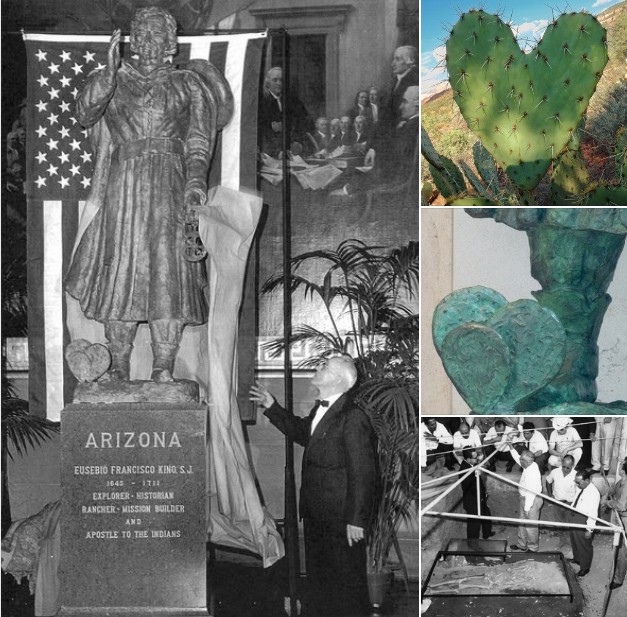
A SPECIAL PRICKLY PEAR VALENTINE HEART TO ARIZONA ON ITS STATEHOOD DAY IN CELEBRATION OF THIS YEAR'S 60TH ANNIVERSARY OF THE DISCOVERY OF KINO’S SKELETAL REMAINS IN MAGDALENA.
On Valentine's Day / Arizona Statehood Day in 1965, the people of Arizona honored Padre Kino as Arizona's heroic representative to the United States by dedicating the beautiful Kino statue at the Statuary Hall of Heroes in the U.S. Capitol Building. Four months after the statue dedication, the President of Mexico ordered Mexico's Instituto Nacional de Antropología e Historia (INAH) to find Padre Kino’s grave.
PRICKLY PEAR VALENTINE FOR ARIZONA
The State of Arizona was admitted as the 48th state of the U.S. on St. Valentine's Day, February 14, 1912. Belgium-American Sculptor Baroness Suzanne Silvercruys (1898-1973) paid tribute to Arizona's nickname as The Valentine State in her statue of Padre Kino. Silvercruys sculpted the pads of prickly pear cactus (opuntia ficus-inida) to look like a heart-shaped valentine in front of Kino's feet. On Valentine's Day / Arizona Statehood Day in 1965, the people of Arizona honored Padre Kino as Arizona's heroic representative to the United States by dedicating Silvercruys' Kino statue at the Statuary Hall of Heroes in the U.S. Capitol Building. More about the 1965 dedication ceremony & festivities at https://www.padrekino.com/.../kin.../kino-u-s-capitol-statue
KINO GRAVE DISCOVERY - 60TH ANNIVERSARY
On May 19, 1966, an international team of scholars and cronistas including archeologists, physical anthropologists and historians from Mexico's INAH, the Arizona State Museum in Tucson, Arizona, and the University of Arizona found Padre Kino’s grave and his skeletal remains in Magdalena, Sonora. This year many conferences and celebrations will happen to commemorate the 60th anniversary of the grave discovery including the annual Kino Festival in Magdalena.
The location where Kino's grave was discovered is now protected in a mausoleum where Kino’s skeletal remains are displayed in the La Plaza Monumental Padre Eusebio Francisco Kino in Magdalena de Kino. The Kino Plaza is designated by the federal government of Mexico as a national monument. Kino is named by the federal government as a "Hero of Mexico.The Kino grave discovery story is as suspenseful and compelling as any great detective story with a lot of humor added and is one of the more astonishing stories in Kino’s 300 year plus historical legacy. More about discovering Kino’s grave and skeletal remains starts at the first of three web pages at https://www.padrekino.com/.../kino.../kino-grave-discovery.
#PadreKino #venerablepadrekino
Finding Kino - 60th Anniversary
February 14, 2026
https://www.facebook.com/eusebio.kino.56/posts/pfbid0gmRQfRpM1aWuqiQcv2gw2YZXxtcmNuLDGqLhuWhSWi59R5hfL1Cw9JtCB89n75yLl
xx
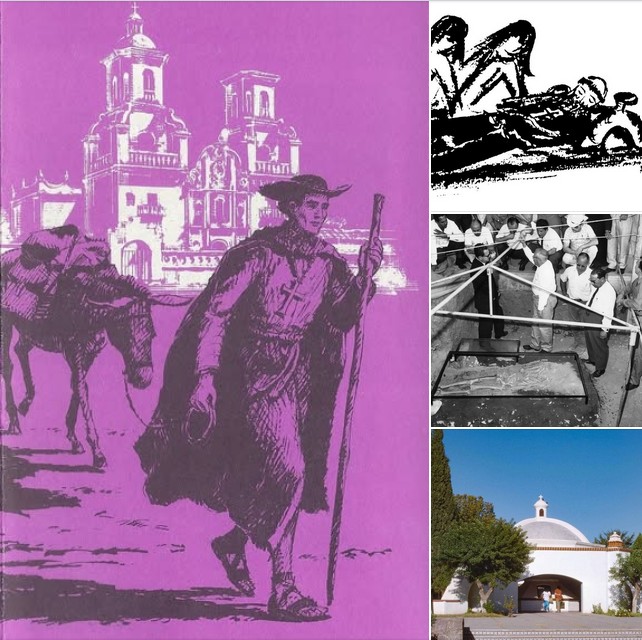
Kino's Good Death - March 15, 1711 on Laetare Sunday - In Celebration of Finding Father Kino. This Year of 2026, the moveable feast of Laetare Sunday and the civil calendar date of March 15th coincide on the calendar. This synchronicity is well-timed because this year marks this May’s celebration of the 60th anniversary of the finding Padre Kino’s grave and skeletal remains in Magdalena.
In the Spring of 1711, Kino rode on his last trail from his mission headquarters of Dolores to Magdalena. It was a Sunday of great joy in Magdalena for Padre Kino as he was celebrating Mass to dedicate the new chapel to his patron saint and his life's model the great missionary St. Francis Xavier. On Laetare Sunday the normal Lenten fasts and repentances are relaxed by the Catholic Church. In Magdalena a grand fiesta would follow to celebrate the dedication of the Xavier chapel, however, Kino collapsed during Mass and died later before midnight. It was a good day for a good death for Kino - a man of great vision & hope who fully lived up to his exemplar Francis Xavier.
Kino was buried in the Xavier chapel but the chapel and Kino’s grave was lost. In May 1966, an international team of scholars and cronistas including archeologists, physical anthropologists and historians from Mexico's Instituto Nacional de Antropología e Historia (INAH) (National Institute of Anthropology and History), the Arizona State Museum in Tucson, Arizona, and the University of Arizona found Padre Kino’s grave and his skeletal remains.
The location where Kino's grave was discovered, is now protected in a mausoleum where his skeletal remains are displayed in the La Plaza Monumental Padre Eusebio Francisco Kino in Magdalena de Kino. The Kino Plaza is designated by the federal government of Mexico as a national monument. Kino is named by the federal government as a "Hero of Mexico."
Based on the Western Christian liturgical calendar Kino died on the moveable feast of Laetare Sunday and on the civil calendar date of March 15, 1711. Most years Laetare Sunday and March 15th do not fall on the same date. Laetare means rejoicing in Latin and the Mass celebrant wears rose colored vestments and not the purple colored vestments worn at other times in the Lenten season.
During the rest of this year 2026, there will be great celebrations marking the 60th anniversary of the finding Padre Kino’s grave and skeleton remains.
Read online Jorge Olvera’s account and other accounts about the extraordinary history of the discovery of Padre Kino's grave with its skeletal remains: ....
Finding Kino - 60th Anniversary
March 14, 2026
https://www.facebook.com/eusebio.kino.56/posts/pfbid0kNzgq7WkiH2FfxC5hxXAqWzD44zeKM8F32ksZxgFuk8ZA17eDq2FsHVNwHX9JEYxl
xx
FINDING KINO - 60TH ANNIVERSARY #1 - “THAT KINO'S REMAINS WERE DISCOVERED IN 1966 HAS TO BE REGARDED AS MIRACULOUS” - BERNARD L. FONTANA.
Dr. Bernard L. (“Bunny”) Fontana of the University of Arizona best summed up the remarkable story of the discovery of Kino’s grave: “That Kino's remains were discovered in 1966 has to be regarded as miraculous.” Fontana wrote this in the afterword in the 1996 book “Find Father Kino: The Discovery of the Remains of Father Eusebio Francisco Kino, S.J. 1965 -1966" written by Kino grave discovery team member Jorge Olvera. Web page links to excerpts from Olvera’s book can be found at the bottom of this post.
Before the search for Kino's grave began, the only record concerning Kino’s grave in the national archives in Mexico City was Kino’s burial record. It said that Kino died after he collapsed while saying Mass as part of the dedication celebrations for the Chapel of San Xavier ("Kino Chapel") in Magdalena where Kino was buried. When the discovery team arrived they interviewed some very old people who remembered that there was a dilapidated chapel standing. It finally collapsed as a result of the 7.6 Sonoran earthquake of 1887. Simply put, Kino’s grave was lost because the the Kino Chapel was destroyed and for the most part forgotten. Also for two and one-half centuries, Magdalena went through the chaotic events of the Jesuit expulsion, numerous Indian attacks, constant and at times violent political strive, and in the early 1930s the anti-clerical administration of Sonoran Governor Rodolfo Elías Calles.The search for Kino could have been doomed from the start. The original Magdalena church records were stolen in the 1880s and sold to the Bancroft Museum in Berkeley California.
Fortunately, just before the Kino search began, anthropologist and ethnohistorian Dr. Henry Dobyns donated to the Magdalena church microfiche copies of the original church records. Today the original church records are still held at the Bancroft Museum. The historical research of these records in microfiche helped the archeologists identify the location of the Campos Church, the Kino Chapel and unearthed burials including Kino's. As the archaeologists proceeded to dig from the Mission Santa Magdalena Mission Church to the Palacio Municipal, they encountered numerous foundations buried underground from past buildings. Also they encountered mixed up soils without clear stratigraphy as a result of the previous attempts to find Kino's grave.
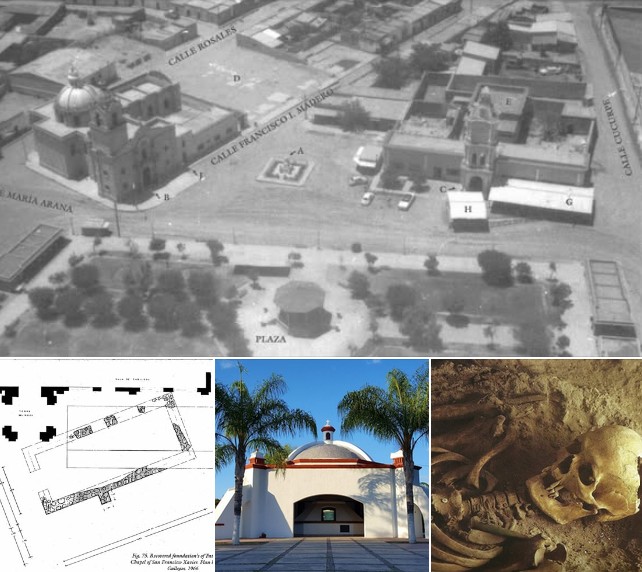
After four months of trenching the plaza, and digging in the Spanish colonial archives, the discovery team found the Kino Chapel. Kino’s skeletal remains were buried 1 meter underground and were less than 1 meter from the foundations of Magdalena’s Palacio Municipal (“city hall”). The location of the Kino Chapel can be seen in the top photograph in the shadow in the corner formed by the main building and its bell tower. The temporary ramada like building marked by the letter “G” was built to shelter the Kino grave site. It was built within a week of the discovery.
Kino’s grave barely escaped destruction when the Palacio Municipal was being built in in the early 1880s. Again it escaped destruction when its bell tower was added in 1910. This is one aspect of the discovery that Dr. Fontana described as "miraculous." See the excavation foundation drawing in the bottom left showing how closed the location of the Kino Chapel was in relation to the Palacio Municipal and its bell tower.
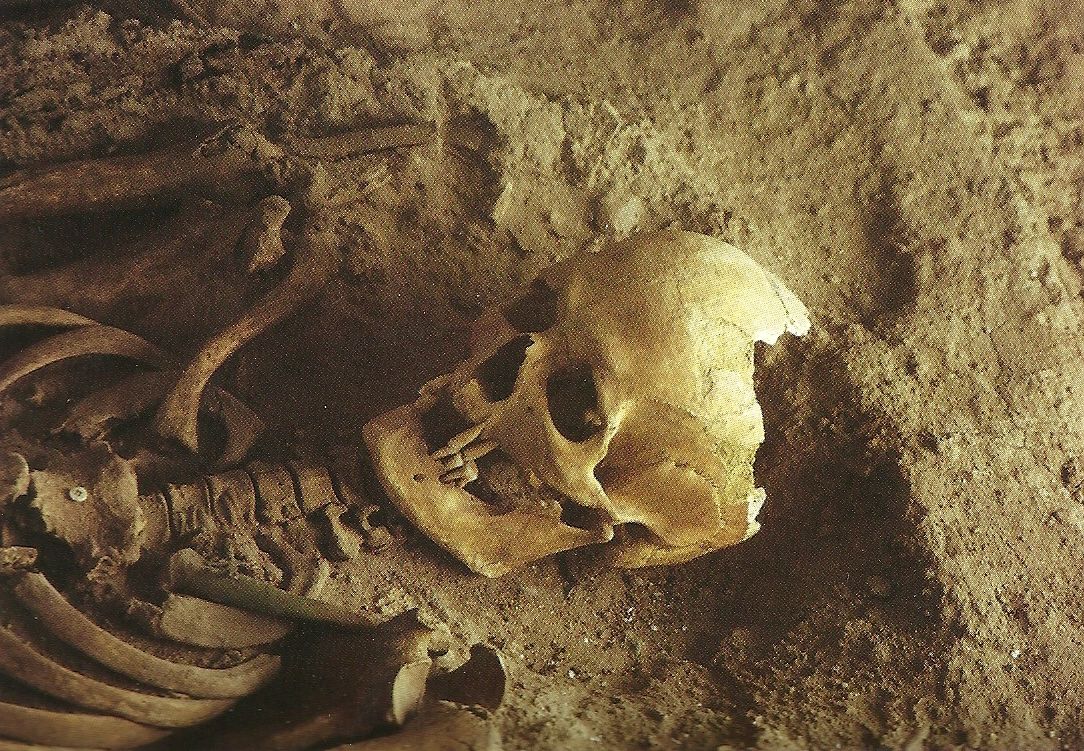
The cropped photograph of Kino’s skeleton (bottom right) was taken by astronomer and pioneer planetary scientist Dr. William K. Hartmann at the time of the discovery of Kino’s grave. Notice Kino’s cassock button and his small crucifix that were found when Kino's skeleton was uncovered. Dr. Hartmann, in addition to being a renowned planetary science researcher, has authored several books on the history and natural environment of the US-Mexico Borderlands. His entire uncropped photograph is set out in the COMMENTS where Kino’s cassock button and his small crucifix may be better seen. Kino's small crucifix is located on the collar bone just right of his cassock button. The cassock button is on Kino's upper sternum.
This May communities throughout Sonora & Arizona will celebrate the 60th Anniversary of the 1966 discovery of Kino's grave. Kino is honored as a "Hero of Mexico" with his skeletal remains now displayed in a mausoleum on the site of Kino’s grave. The mausoleum is part of La Plaza Monumental Padre Eusebio Francisco Kino that is a national monument of Mexico. The 2026 Kino Festival in Magdalena is celebrated from May 14 to May 17th. Its is the 2nd largest cultural event in Sonora and features theater, music and dance with talks, workshops and art. Magdalena de Kino is located less than 60 miles south of the U.S.-Mexico Border between Tucson and Hermosillo.
[see comment below]
Finding Kino - 60th Anniversary
April 12, 2026
https://www.facebook.com/eusebio.kino.56/posts/pfbid02AVsL3ZC9sknwA8kvn6pHqYxpnNPm6NQnkrQ7MZqmtLi1wQa25iMwVWN4vJSUPZhDl
xx
COMMENT
FINDING KINO - 60TH ANNIVERSARY. Photograph of Kino’s skeleton (bottom right) was taken by astronomer and pioneer planetary scientist Dr. William K. Hartmann at the time of the discovery of Kino’s grave. Notice Kino’s cassock button and his small crucifix that were found at the time of discovery. In addition to being a renowned researcher in planetary science, Dr. Hartmann has authored books on the history and natural environment of the US-Mexico Borderlands. Kino's small crucifix is located on his collar bone just right of the cassock button. The cassock button is on Kino's upper sternum.
Comment
Finding Kino - 60th Anniversary #1
April 12, 2026
xx
FINDING KINO - 60TH ANNIVERSARY #2 - KINO CHAPEL BURIALS CORRESPOND TO CHURCH BURIAL RECORDS. POLZER’S ACCOUNT OF THE KINO GRAVE DISCOVERY
On May 19, 1966, an international team of scholars and cronistas including archeologists, physical anthropologists and historians from Mexico's INAH and the University of Arizona found Padre Kino’s grave with his skeletal remains in Magdalena, Sonora. Several months later, the Mexican Academy of History concurred with the discovery.
This year celebrations throughout Sonora will occur to commemorate the 60th anniversary of the Kino grave discovery including the annual Kino Festival in Magdalena. The Kino Festival that is held annually to commemorate the grave discovery is the 2nd largest cultural event in Sonora. It features theater, music and dance with talks, workshops and art (bottom left image). This year the Festival will be held from Thursday May 14 to Sunday May 17.
In Charles W. Polzer’s account of the grave discovery some of the main evidence for the Kino discovery is reviewed. One of the compelling items of evidence is that burials were uncovered by the archaeologists that corresponded to church records of the burial that were made in the Kino Chapel. For Polzer’s account see below the section entitled “Polzer Account - Kino Grave Discovery”
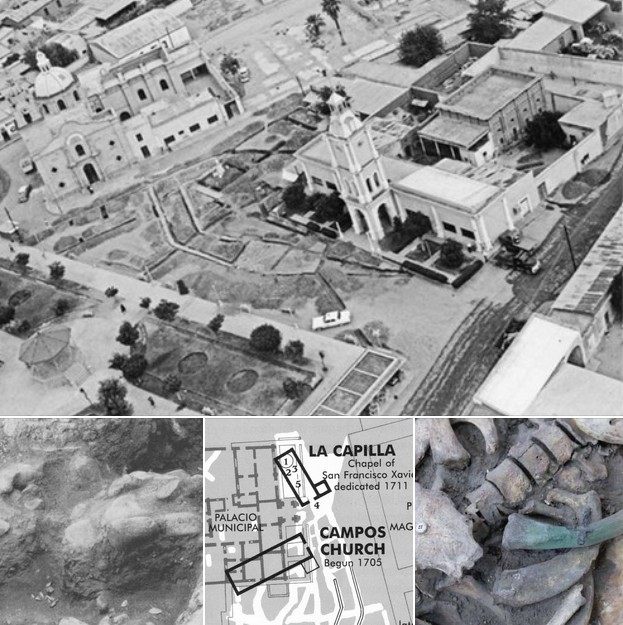
The drawing in the bottom center shows the locations of 5 of the most important burials and the dates of those burials. The excavation of these burials identified the location of the Kino Chapel and then helped identified Kino’s grave and skeletal remains.
A few days before finding Kino’s grave, the discovery team uncovered the skeleton of Spaniard Salvator de Noreiga (Number 4). Noriega’s 1739 burial record documented that he was buried outside the front door of the Kino Chapel. This established that the team had found the first foundation of the Kino Chapel. Inside the Kino Chapel the burial of 90-year-old Indian Jose Gabriel Vega (Number 5) was uncovered. The 1837 burial record reported that Vega was buried midway in the chapel. As the digging proceeded in the chapel, Kino’s grave and skeleton (Number 1) were uncovered in front of location of the altar as Kino’s 1711 burial record indicated.
The examination of Kino’s skeleton (bottom right photograph showing Kino's thorax region) revealed a European male who was at least 60 years old. Kino died at age 66. The skull was a classic European type from the region of the Alps. Kino was born in today’s Italian Alps. The skeleton showed signs of arthritis. Kino had trouble horseback riding and writing in his later years. The tibia bones of the legs showed a pronounced retroflexion. This was characteristic of people of Kino’s homeland. Kino’s coffin was mostly gone, but a simple cassock button remained on Kino’s breastbone and a small Jesuit crucifix of the 17th century lay on his collarbone.
Then archaeologists uncovered two “secondary burials.” - burials that were reinterred from someplace else. According to church records one year after Kino’s burial, the bones of missionary fathers Iturmendi (Number 3) and González (Number 2) were reinterred on the Epistle and the Gospel side of the chapel on either side of Kino’s grave in 1712. The padres were originally buried in Tubutama 10 years earlier.
The top photo shows central Magdalena most likely on May 14, 1996, a few days before Kino’s grave was discovered. The trenching uncovering the Kino Chapel’s southern foundation had just finished. A day later on May 21, 1966 Kino’s grave was discovered 3 feet (1 meter) below the ground in the southwest corner of the Palacio Municipal’s main building and its bell tower.
In August 1965 the discovery team started digging in front of the present Magdalena church. It restarted excavations in April 2025. It dug across the plaza to the Palacio Municipal. You can see the open trenches in the photo. There were more trenches that are not seen because they were back filled before the photograph was taken.
See the COMMENTS for the site plan for the historic center of Magdalena showing “The Excavations For Kino’s Grave.” Polzer writes that the archaeologists and the workers dug 2 kilometers of trenches in the discovery of Kino’s grave.
_________________________________________________________
POLZER ACCOUNT - KINO GRAVE DISCOVERY
Here in Magdalena in May, 1966, a team of anthropologists and historians located and identified the grave of Padre Eusebio Francisco Kino. The successful discovery climaxed nearly forty years of frustrating failures. .....
[ Note: For the beginning of Polzer’s article about previous attempts to find Kino before 1965, see The Grave Site History - Kino Grave Discovery- Page 1 web page at the section entitled “The Search For Kino's Grave - Digging in Magdalena Plaza and Church Archives - Charles W. Polzer, S.J.” at https://www.padrekino.com/.../kino.../kino-grave-discovery ]
At the request of Mexican President Diaz Ordaz, the Secretary of Public Education, Agustín Yáñez, commissioned Professor Wigberto Jiménez Moreno, the director of the Department of Historical Investigation of the National Institute of Anthropology and History (INAH), to find the remains of Padre Kino. It was June 30, 1965. Whatever legal log-jams the Americans conjectured over in the search for Kino’s grave were swept away by the executive order of the Mexican federal government. Professor Jiménez Moreno, Dr. Jorge Olvera, the colonial art historian, and Professor Arturo Romano, the physical anthropologist of the National Institute, began a systematic search of the archives for information about the grave.
A quick trip to the Sonora frontier in August, 1965, acquainted Jiménez Moreno and Olvera with their newly inherited problem. Rumors and opinions varied on all aspects: the grave, the chapel, the remains, and their transfer. Professor Jiménez Moreno retired to Mexico City profoundly aware he had more on his hands than a casual search. Dr. Olvera remained behind to begin the methodical excavations which eventually crisscrossed the site of the ancient pueblo.
The traditional Fiesta of San Francisco forced an interruption of work in October. The trenches were back-filled and the investigators took advantage of the recess to evaluate their problem. Professor Jiménez Moreno accurately reassessed the situation. The discovery of the grave and the verification of the remains of Padre Kino would be no simple matter. The ingredients of success would be men and knowledge, both archaeological and historical.
It was April, 1966, when the team arrived again in Magdalena. Jiménez Moreno invited other qualified investigators to join the team. Padre Cruz Acuña from Hermosillo pitched in to comb through old diocesan archives and to interview old timers. The Reverend Kieran McCarty, O.F.M., historian of San Xavier del Bac (Tucson), signed on as research historian; his familiarity with Franciscan records aided materially in piecing out the fate of the old chapel. Dr. William Wasley was placed on detached service from the Arizona State Museum; his keen |172| knowledge of the archaeology of the region provided the team with essential knowledge and skills. The chemist from the local clinic, Dr. Gabriel Sánchez de la Vega, gave invaluable service as the man most acquainted with the recent attempts to find the grave.
To the men of Mexico City in 1965 the search for the grave of Padre Kino appeared to be a simple matter. To the same men on the scene in Magdalena in 1966 the search was recognized as enormously complicated, and perhaps impossible. Excitement charged the air of Magdalena as the experts challenged the unknown.
Professor Jiménez Moreno understood his problem well. Here was a situation that required solution by a process of elimination. Units of the team spread out from Magdalena to probe each site favored by certain rumors and opinions. No reasonable possibility was overlooked, but one by one they were being eliminated as archaeological and historical evidence piled up. Slowly the circle of probability narrowed to the plaza in front of the Magdalena church. Over two kilometers of exploratory trenches wandered through the town. Work crews exposed foundations of buildings long since forgotten. The earth yielded the bones of countless human beings.
It seemed as though the search would succumb to the intricacies of its own method. Then, the breaks began to come. The historians were building up key clues about the chapel from the archives. The major find was a description of the little chapel of San Francisco Xavier in an 1828 report by don Fernando Grande: |173| [174 drawing of the excavations for Kino's grave]
"The chapel of this town is moderate. It is of adobe material. The entrance faces south. There is a moderate little tower in which are located three bells and another small one. It has nothing that draws particular attention. The principal and only altar is in the chancel. On it are set an image of the crucified Christ and another of the Virgin of Dolores; at the feet of the larger carving is the littler one of ordinary quality. And in some niches which form a reredos along the wall of the altar are set the statue of St. Magdalene, the patron of the pueblo (it’s small but well carved), one of St. Francis Xavier, and one of Blessed Joseph Oriol; the latter is imperfectly carved. Midway in the nave of the church is a niche where there is located in a case a large carving of St. Francis Xavier, an object of devotion everywhere in the northwest. It is a beautiful and serious sculpture."
From the burial register two more relevant facts were learned. In 1739 a Spaniard, Salvador de Noriega, was buried at the entrance to the chapel. Nearly a century later a ninety year old Indian resident, José Gabriel Vega, was buried before the niche of St. Francis Xavier.
While the historians read through miles of micro film and dusted off old records, the archaeological teams followed the clues exposed by their trenching. The cement foundations in front of the church which had occupied Dávila years before were soon discounted when it was learned that lime was not used for construction in the Pimería during the earlier Jesuit period. Traces of adobe walls became more evident as the work crews learned the difficult art of distinguishing an adobe foundation from the alluvial deposits natural to the terrain. One wall which ran east and west had attracted the attention of Dr. Olvera who felt that it maintained the proper orientation shown in some mid-19th century sketches of the pueblo. But what is one wall in the middle of a whole town?
Dr. Wasley convinced the team of the need to correlate their findings with known Jesuit ruins in the Pimería; this was a stratagem worked out a year before between Wasley and Polzer, who insisted on the utility of the uncontaminated ruins at Remedios. On the very day Wasley, Olvera, and Romano were making their reconnaissance, the workmen in the trench that followed Olvera’s favored wall came to its end. Professor Jiménez saw that they had really reached a corner. The wall turned toward the |175| [page 176 drawings of Kino Chapel and Campos Church] of City Hall. This was the first clear indication that it might define the foundations of a building.
Earlier in the exploration a crew had followed a lateral trench from Olvera’s wall. Close to the north-south axis of the main trench they exposed a skeleton which Professor Romano identified as that of a European. Everyone regarded the discovery as “Suspect Number One.” But then other pieces of the puzzle began to fall into place. “Suspect Number One” was on the south side of the adobe wall, and now that the long adobe wall to the east of the burial had turned a corner westward, there was little doubt that the Number One Suspect was Salvador de Noriega.
The east wall of the building showed evidence of a small buttress about midway. This corresponded to another historical discovery that Padre José Pérez Llera in 1828 erected a buttress to prevent the wall from further slumping! The corner discovered on the day the team was reconnoitering other missions proved to be that of the apse of the chapel. Cautiously the crews followed the line of the adobe and boulder foundation. The sharp spades cut through the soil ever so carefully. A shovel full of earth spewed into the screen. Nothing. Then at the base of the trench fell a piece of a skull, dislodged from the edge! A cry! Tension mounted as Dr. Wasley, Dr. Olvera, Dr. Romano and Professor Jiménez Moreno carefully exposed the whole skull. Could it be? Could it really be Kino’s? It was 4:45 on the afternoon of May 19, 1966.
The entire team concentrated on the complex of trenches that seemed now to be located on the site of the ancient chapel. The skeleton discovered that fateful afternoon was delicately uncovered. The earth within the entire chapel area was cautiously peeled back. Then the key elements began to fall in place without complication. “Kino” was an original burial on the Gospel side of the chapel; the body had rested between the second and third foundation support, just as the burial record of Padre Agustín de Campos said. Then, at Kino’s feet, but closer to the west wall, appeared a “secondary burial,” one that had been transferred from another place. Across the chapel floor area, on the Epistle side of the apse, another secondary burial was uncovered in the packed earth. Fantastic! But predictable if this were really the chapel. In 1712, one year after Kino’s burial in the chapel, Padre Campos transferred the bodies of Padres Iturmendi and González from Tubutama and interred them in the same |177| chapel on the Epistle and the Gospel side respectively.
Midway down the body of the church the excavators came upon another burial of a very old Indian man. Another key slipped into place because 90 year old José Gabriel Vega was buried before the niche of St. Francis Xavier – located half way down the nave! And Salvador de Noriega was still lying patiently at the southerly entrance.
Professor Romano carefully studied the skeleton which lay on the gospel side of the building – if this were really the chapel. The man had been in his 60’s. Kino had been 66. The skull was a classic European type from the Alpine region. Kino was from the Tyrol. The tibia bones of the legs showed a pronounced retroflexion. This was characteristic of the mountain people of Kino’s homeland. When Wasley and Olvera removed the last traces of the wooden coffin which had caved in on the chest of the skeleton, they found a small bronze cross lying on the clavicle. This was typical of the Jesuit missionary of the 17th century.
On May 21, 1966, the team reached the conclusion that it had in fact discovered the long lost remains of Padre Eusebio Francisco Kino. On May 24 the announcement was made to the general public; no doubt remained in the minds of any of the team or the experts called in after the initial conclusion was reached. The Reverend Ernest Burrus of the Jesuit Historical Institute at Rome, who luckily was visiting in Tucson, agreed in full. And finally on July 14, 1966, the Academy of History met in Mexico City to review the evidence. Professor Jiménez Moreno presented seventy-two depositions explaining the discovery. Then, Dr. Alberto Caso in the name of the Mexican Academy of History pronounced in favor of the |179| identity of the remains. Padre Kino was found at last.
As with everything that man does, there are always those who doubt. Some wanted the archaeologists to uncover a plaque or headstone. None ever existed, particularly for a man like Kino. He died as he had lived, in poverty and in the presence of his Lord. What the doubters had forgotten was that the monument over his grave was not just a headstone, but a chapel, and not just a cross with a name, but a whole culture.
So conclusive is the evidence which the team under Professor Jiménez Moreno uncovered that if the skeleton had been marked with another name, the anthropologists and historians would have realized someone was trying to play a joke.
But perhaps the most remarkable thing of all is that when the anthropologists were asked to reconstruct the likeness of Kino from his skeletal remains, they shrugged and pointed to a sketch on the wall of the City Hail. There hung the drawing done by Mrs. Frances O’Brien of Tucson. One could hardly come any closer to the human reality. She had sketched his portrait from the salient features of the Chini family as they lived in this century. She had only hoped to approximate Kino’s likeness. Little did she know she had drawn the last clue in the recognition of Padre Eusebio Kino. |179|
Dr. Charles W. Polzer, S.J.
The Discovery of Padre Kino's Grave
"Kino: A Legacy...”
[see comment below]
Finding Kino - 60th Anniversary
April 18, 2026
https://www.facebook.com/eusebio.kino.56/posts/pfbid02boYS7ySGPxgj8CbTPoxkDCBYBeZdvFyjgy5YMY68Bmt1nig3m8L5eky3dNdSCbjSl

xx
COMMENT
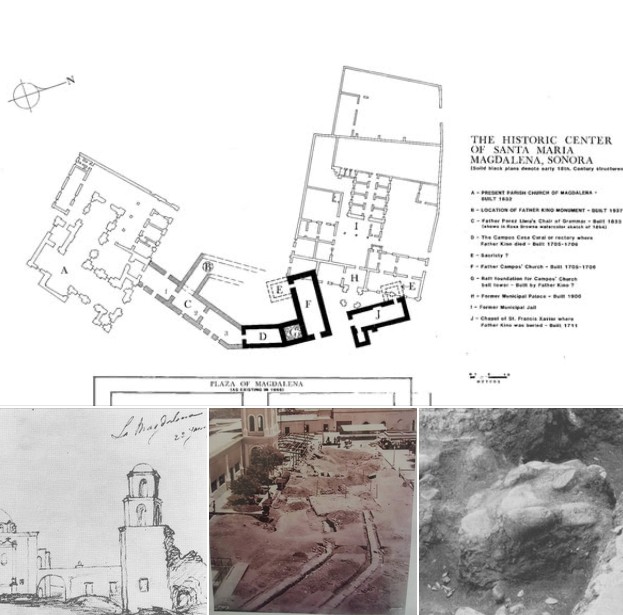
The site plan for the historic center of Magdalena showing “The Excavations For Kino’s Grave.” Polzer writes that the archaeologists and workers dug 2 kilometers of trenches in the discovery of Kino’s grave.
Comment
Finding Kino - 60th Anniversary #2
April 18, 2026
xx
FINDING KINO - 60TH ANNIVERSARY #3 - HOW KINO’S GRAVE WAS FOUND ON MAY 19, 1966 - PUTTING TOGETHER THE PIECES OF THE KINO PUZZLE.
The leader of the Kino discovery team who was the head of historical research at INAH (Mexico’s Instituto Nacional de Antropología e Historia) summed up the difficult problem of finding Father Kino. Wiberto Jiménez Moreno said the search was "... like looking for a needle in a haystack, but first we had to find the haystack!" Finding the haystack meant uncovering the foundations of the lost Kino Chapel where Kino was buried in 1711. Otherwise it would be impossible to find Kino’s grave.
Today archaeologists discover past societies and cultures by their excavations. They do not set out to find a particular individual’s grave. The search for Kino’s grave was quixotic at best. From an archaeologist’s view point, the risk of failure was highly likely and already their professional reputations might have been destroyed with their involvement in what was in essence a “treasure hunt”. It was commonly known as the "crazy project." And a week before the Kino grave discovery, a famed Mexican historian of northern New Spain wrote an article that was published in an leading Mexico City newspaper with the headline "The Remains of Father Kino Will Never Be Found."
Knowledge of Magdalena’s 250 year history of building was sparse. The discovery team encountered many buried foundations that were unknown. Only as the dig proceeded did historical documents come to light identifying buildings and their estimated dates of their construction and destruction. Then there were the many skeletons that they uncovered as the archaeologists unintentionally wandered into the previously unknown cemeteries. The ground that they would be digging was chaotic.
The discovery team had this haunting feeling that 250 years of human activity may have completely destroyed the foundations of the Kino Chapel, leaving no trace of Kino’s grave. This, in fact, was only a meter away from happening. The total destruction of the hidden foundation of the Kino Chapel (J) and to the Campos Church (F) almost occurred twice: the construction of the main building of the City Hall (H) (Palacio Municipal) in the late 1800s and in 1910 the construction of the City Hall bell tower. The construction of the bell tower was wedged between the Kino Chapel and the Campos Church within feet of their foundations. See https://www.facebook.com/eusebio.kino.56/posts/pfbid02AwBbfFoyEvNTg9iqgxzRncr6UZSRB7UccTmXSDg5rTTL62nJSrTjyNvNusP8oW4El
The discovery team and their workers dug almost 2 kilometers of trenches through the center of historic Magdalena. The INAH team members were constantly threatened with having the project's funding stopped from the very beginning. Team leader Jiménez Moreno made several trips back and forth to Mexico City to lobby for the project's continued funding. The last trip before the Kino grave discovery was a personal meeting with the President of Mexico. In their last digging season of April-May 1966, the team again made Magdalena's center look like a battle ground. They even dug up the floors and walls inside several buildings including today's existing Franciscan Mission Church (A). But it was the trenching from the Franciscan Mission Church (A) towards the City Hall (H) that led directly to the discovery of Kino’s grave.
TOP IMAGE - 1966 SITE PLAN OF MAGDALENA’S EXISTING BUILDINGS AND THE EXCAVATED FOUNDATIONS OF ITS PAST BUILDINGS
The top image in the post is a site plan that will aid in understanding how the discovery team found the Kino Chapel (J). The team trenched their way through Magdalena architectural history, starting from the Franciscan Mission Church (A) (“Present Parish Church of Magdalena”) on the left to the foundations Kino Chapel (J) on the right. The archaeologists followed this route as they uncovered the foundations of lost buildings marked “C, D, E, F and G.” The site plan also shows buildings and structures as they existed as of May 1966: the Franciscan Church (A), the Kino Monument (B) and the City Hall (H) with its jail (I).
The first European building in Magdalena was the Campos Church (F) that Kino completed around 1706. It was named in honor of Santa María Magdalena, sometimes known as the Apostle of the Apostles. I refer to this church as the Campos Church although Father Campos lived at San Ignacio.
It appears that the Campos Church had structural problems. It was reported as early as 1734 that the church was in a state of disrepair. In 1746 it was referred as the “old church.” Maybe the Campos Church was not properly repaired nor maintained because Magdalena never had a resident Jesuit missionary.
Sometime shortly thereafter the Campos church’s bell tower (G) with its archaeologically significant raft foundation and its rectory (D) (priest’s house) were built. The footprints of these buildings and the Campos Church are outlined in solid bold lines. They were standing at the time of Kino's death.
In March 1711, Kino rode his last earthly trail from his Mission Dolores headquarters to Magdalena to dedicate a chapel to his patron saint, the great Jesuit missionary Francis Xavier. Kino collapsed in the chapel while saying the dedicatory Mass. He died a few hours later near midnight in the rectory (D). Kino was then buried in the Kino Chapel (J). I refer to the Capilla de San Francisco Xavier as the Kino Chapel.
LOWER RIGHT IMAGE - JESUIT FOUNDATIONS OF BOULDERS SET IN CLAY-AND-MUD MORTAR
A major worldwide event changed the history of Magdalena. In 1767, the entire Jesuit religious order was expelled from New Spain and from the rest of the Spanish Empire. The Franciscan religious order then took the place of the Jesuit missionaries in all of the northwest of New Spain.
Most of the Franciscan building history was unknown to the discovery team at the beginning of the search. As the archaeologists uncovered foundations, the team historians would find documents in the archives that allowed the compilation of building histories. The footprints or foundational outlines of the buildings that were built by the Franciscans are outlined in hatched gray lines. The beautiful Franciscan Church (A) still stands today and is an active parish church.
With the arrival of the Franciscans, came new types of building techniques and materials. The Franciscans built with walls made of kiln fired adobe block (burnt adobe) and their foundations were made of quarry stone set in lime-and-sand mortar. The Jesuits built their walls from sun baked adobe block and their foundations were made of boulders set in clay-and-mud mortar. See photograph at bottom left for part of a Jesuit foundation of the Kino Chapel. The width of the foundation is about 1 meter (1 foot). The difference between the Jesuit and Franciscan building techniques was first observed by team member and archeologist William W. Wasley of the University of Arizona. Knowing this difference was essential in identifying the Kino Chapel.
From 1832-1833, Franciscan Peréz Llera went on a building spree in Magdalena. He completed the Franciscan Church (A) and its rectory (priest house) that adjoined the church. He then built a school (C) with 3 rooms that extended perpendicularly from the Franciscan Church’s rectory to the Kino era rectory (D) adjoining the Campos Church (F). And in 1838 Peréz Llera built a buttress to shore up the Kino Chapel’s west wall in order to prevent it from collapsing. Significantly the archaeologists uncovered the foundations to the buttress. This was more corroborating evidence that Kino Chapel was found.
The construction of the City Hall (H) (Palacio Municipal ) started in the late 1800s and was completed in 1910. Its construction nearly obliterated Kino’s grave and all the archaeological record of both the Kino Chapel (J) and the Campos Church (C).
After the Kino grave discovery, the City Hall was torn down and replaced by a mausoleum located where Kino’s grave was found. Today under the mausoleum’s dome is a glass enclosure that publicly exhibits Kino’s skeletal remains. The mausoleum is part of a beautiful plaza that also features the Franciscan Church. The plaza is officially called La Plaza Monumental Padre Eusebio Francisco Kino. It is designated by the federal government of Mexico as a national monument. Kino is officially recognized as a "Hero of Mexico."
IMAGE LOWER LEFT - PINART PAINTING (DETAIL)
THREE ART WORKS
THE SUPERIMPOSITION OF 1930 PHOTO PINPOINTS LOCATION OF KINO CHAPEL
SEE SUMMARY CHART IN COMMENTS
When the INAH members of the team left their homes in Mexico City in August 1965, the only clue that they had about the location of Kino’s grave was based on his burial record in the national archives. The burial record documented that Kino "is buried in a coffin in this chapel of San Francisco Xavier on the Gospel side where fall the second and third ashlars.” In 1965 no one knew exactly where the location of the chapel was. There was even a widespread belief that Kino’s remains were unburied and taken away from Magdalena in the early 1930s and hidden to protect them from the anti-clerical administration of Sonoran Governor Rodolfo Elías Calles. Discovery team members traveled to several other communities in Sonora to investigate.
A major contribution to finding the Kino Chapel was made by team member Jorge Olvera. Olvera was an INAH architectural historian and archaeologist. He studied 2 works of art depicting Magdalena that were created at different times in mid 1800s. Both depicted the Campos Church and the Franciscan Church. The drawing by Henry Chever Pratt (1851) and the water color painting by J. Ross Browne (1879) helped Olvera determine that the location of the lost Campos Church would be found towards the front of the City Hall. A limited excavation had just started just north of the Kino Monument (B). Most of the excavations were concentrated in other areas of Magdalena under the direction of Jiménez Moreno. The areas included a vacant lot on the west side of the City Hall and a prisoner yard inside the Magdalena jail (I). The prisoners would call out from their jail cells "Let us help find Padre Kino.” Finally, the prisoners were allowed to work inside and outside the jail> They were praised as some of the best workers.
From his examination of the J. Ross Browne painting, Olvera knew if he could follow the foundations of the Peréz Llera School (C) that he would eventually run into the Campos Church (F). Olvera also determined from the painting that the front of the Campos Church faced due west.
A week before the grave discovery, Olvera received a drawing by Alphonse Pinart (1879) from George Eckhart, a Pimería Alta cronista living in Tucson. The lower left image in this post is a detail of the drawing. The drawing shows from a northern direction a dilapidated Kino Chapel with its back wall and bell tower still standing. The front of the Kino Chapel is facing south in the drawing. The Franciscan Church is in the background. To the left of the Kino bell tower is a mound of dirt. An 89 year old informant said that the mound was the remains of the Campos Church. The ruin of the Kino Chapel finally collapsed 10 years after the painting was made. It fell down during the 1887 earthquake centered in nearby Bavispe. It was estimated that the strength of the earthquake measured 7.2 on the Richter scale.
Olvera superimposed the Pinart drawing over a photograph that was taken in the 1930s from the exact same vantage point as that of the painting. Both the drawing and photograph had the Franciscan Church in the background. The City Hall is only shown in the photograph. Olvera superimposed the Pinart drawing over the photograph, aligning them with common architecture points on the Franciscan Church. In the composite sketch, he traced Pinart’s Kino Chapel, the photograph’s City Hall and the Franciscan church. The composite sketch predicted the location of the Kino Chapel showing it in the southwest corner main City Hall building and its bell tower. In the COMMENTS, a chart can be viewed that summarizes Olvera’s methodology and shows the Pinart drawing, the photograph and resultant composite sketch.
Seeing Olvera’s composite sketch, the head of INAH’s department of physical anthropology, Arturo Romano Pacheco, directed that more resources be devoted to the excavations in front of the City Hall. Romano Pacheco had just arrived and took over from Jiménez Moreno as the archeological team leader. The next day Romano Pacheco and William Wasley started to uncover the distinctive Jesuit foundations in front of the City Hall.
LOWER CENTER - PHOTOGRAPH IMMEDIATELY AFTER FINDING KINO’S GRAVE - NORIEGA BURIAL & FERNANDO GRANDE’S REPORT COLLABORATE LOCATION OF KINO CHAPEL
The photograph in the bottom center of the post was taken from the bell tower of the Franciscan Church a few days after the discovery of the Kino Chapel and grave. The location of the Kino Chapel (J) is on the other side of the bell tower of the City Hall (H) where structural steel is being erected as a framework for a building to protect the Kino’s skeleton where it was found. This photograph provides a guide to the discovery team’s excavations that ultimately led to finding the Kino Chapel. The Kino Monument (B) is in the lower left corner of the photograph.
Olvera continued his systematic northward digging between the Franciscan Church and the City Hall. He continued excavating along the foundations of the Perez Llera School (C) with its Franciscan foundations of boulders set in lime-and-sand mortar. This line of excavations following the foundations are shown in the bottom half of the photograph. Then he and Walsey had their first encounter with Jesuit foundations made of boulders set in clay-and-mud mortar just north of the Kino Monument (B). The Jesuit foundations shifted their direction from the alignment of the the foundations of the Perez Llera School (C) slightly towards due north. Olvera started uncovering the foundations of the Campos church rectory (D). Next came the raft foundation of the bell tower (E) that is shown in the photograph in the cleared white square area at the end of the parallel trenches. Finally Olvera uncovered the foundations of the front of the Campos Church (F).
Meanwhile, the historical team members where researching from photostatic copies of old church burial records. The originals were kept in the Bancroft Library at the Univerity of California, Berkeley where they are still. The historic team members were Father Cruz Acuña, historian of the Archdiocese of Hermosillo, Chemist Gabriel Sanchez de la Vega, Magdalena cronista, and Father Kernan McCarty, historian of the Mission San Xavier del Bac outside of Tucson. The historians brought copies of burial records and other archival documents to the archaeologist as they dug. One collection of records documented burials inside and just outside the Kino Chapel. A day or two later these records would verify the location of the Kino Chapel and identify Kino’s skeletal remains.
Arturo Romano Pacheco was uncovering a skeleton outside a foundation that turned out to be the south wall of the Kino Chapel. Romano Pacheco match the location of the skeleton to the 1739 burial record of Salvator de Noreiga. That record documented that Noreiga was buried immediately outside the front entrance of the Kino Chapel. This was consistent with Pinart's painting that depicted the front of the Kino chapel facing south.
Then the team historians brought another important document. It was a 1828 report about Magdalena written by Fernando Grande on an inspection tour addressed to the vice-governor of Sonora. Grande wrote “The Chapel of the pueblo is of medium size, its material is adobe, its portal faces south and displays a small medium sized bell tower in which there are three bells and a small one. .... In the middle of the church nave there is a niche in which a large sized image of San Francisco Xavier is placed, a beautiful and solemn sculpture that is an object of devotion in all this upper [northern] part of the West.”
In matching the document description to what the team had uncovered, Jorge Olvera wrote “In fact, everything matched Fernando Grande's description: the walls that rested on the foundations we had now discovered, in their almost complete form, were of adobe. Not a single vestige of [Franciscan] burnt brick had been found. The portal, as Grande wrote, faced south. The building was, as he said, medium sized, and, as we discovered later, it had a bell tower as he had indicated. The Grande description was additionally verified by the burial of Noriega outside and in front of the south facing door.’
On May 18, 1966, the team was as Olvera wrote “virtually certain” that they found the Kino Chapel. The next day on May 19, 1966, the team found Kino’s grave and skeletal remains at 4:40 PM.
Later in 1966, discovery team member Father Cruz Acuña wrote about that late afternoon moment: “Dr. Romano said: I think we have found him. . . . Professor Olvera, somewhat nervous, remained silent, or I didn't hear what he said. Dr. Wasley, in spite of his scientific and critical spirit, uttered the phrase: "It is like a dream." Sanchez de la Vega was the only one who smiled absolutely sure and satisfied ...”
Jorge Olvera added his own memories. He writes that at that moment he said in a near whisper "Look! This is a 17th-century cross on his [Kino’s] left clavicle!" Olvera then describes the state of mind of cronista Gabriel Sanchez de la Vega. His mind was one of calm assurance. Sanchez de la Vega reflected on his many years of trying to find Father Kino, leading the Lions Club in its non professional efforts. Now working with some of the best archaeologists and historians in the world, Kino had finally been found. Two months later, the Mexican Academy of History would agree.
There are many more pieces of the puzzle that confirm the discovery team’s finding of the Kino Chapel. The burials including Kino’s were found as documented in the church burial records. See https://www.facebook.com/eusebio.kino.56/posts/pfbid0YDFzFrrX62L25pdiKSpajTBSCXZZgi9kxwDyYzC81MdUYjFGPG4vWPM3QgHUH6rbl
As mentioned earlier in this post, was there was the excavation of the foundation of the buttress that shored up the west wall of the Kino chapel just as documented by Franciscan Peréz Llera.
Using his expertise in the Spanish colonial architecture and "traza" (town planning), Jorge Olvera points out that the Kino Chapel and the Campos Church were intentionally located on the highest hill top in the historic center of Magdalena with a steep cliff on one side dropping down to the river. Kino’s Magdalena mission buildings, like most of his other mission complexes, were located in a place where the topography provided the best defense against attack and protection for Kino's indigenous flock.
Olvera notes that the walls of the Kino Chapel and the Campos Church are aligned to the cardinal compass points: due north, south, east and west. Looking at the site map, the buildings built after Kino’s death do not align with the cardinal compass points but are askew of them. Kino was appointed by the Viceroy of New Spain as a royal cosmographer. He was charged to fulfill the duties of map maker, surveyor and astronomer. As a royal cosmographer, Kino aligned his Magdalena buildings to the cardinal compass points as he followed the rules concerning town planning as dictated by the Law of the Indies.
[see comment below]
Finding Kino - 60th Anniversary
April 25, 2026
https://www.facebook.com/eusebio.kino.56/posts/pfbid031NCSYABx1h3hvhzMF4yxbHEUCULWBKuSoLGgTMTS747EHNXhDYXNw4Cy95vBE15Hl

xx
COMMENT
Jorge Olvera's superimposition sketch of 1879 Pinart drawing over a 1930s photograph predicts location of the hidden foundations of 1711 Kino Chapel (Chapel of St. Francis Xavier) where Kino was buried.
Chart Text
Superimposition of Images
Predicts Location of Lost Kino Chapel and Kino’s Grave
The superimposition by Jorge Olvera of Image 1 with Image 2 by aligning background arch in the Magdalena Church shown in both images creates Image 3 showing location of the lost Kino Chapel next to the then existing City Hall.
← ← Image 1
1938 Photograph of existing City Hall with Magdalena Church in background.
← ← Image 2
1879 Alphonse Pinart Drawing of existing Kino Chapel with Magdalena Church in background.
← ← Image 3
Composite Drawing of Images 1 & 2 showing location of lost Kino Chapel next to the existing City Hall with Magdalena Church in background.
Based on Image 3, INAH & University of Arizona team finds Kino Chapel’s “Jesuit” foundations and locations of Kino’s and 4 other burials as described in Magdalena records. Further verification made by evidence of architectural features including east wall buttress, bell tower, chapel orientation and southern entrance as presented in historical documentation. More at www.padrekino.com.
Comment
Finding Kino - 60th Anniversary #3
April 25, 2026
xx
FINDING KINO - 60TH ANNIVERSARY #4 - KINO’S TRAZA TOWN PLAN LOCATES FIRST MAGDALENA MISSION BUILDINGS ON DEFENSIVE HILLTOP AND ALIGNS WALLS OF THE KINO CHAPEL AND CAMPOS CHURCH TO THE CARDINAL DIRECTIONS UNLIKE LATER SPANISH COLONIAL BUILDINGS IN MAGDALENA.
Kino grave discovery team member Jorge Olvera, the INAH architectural historian and archaeologist, used his expertise in the Spanish colonial architecture and town planning (“traza”) to locate and identify the excavated foundations of the Kino Chapel.
Kino’s burial record documented that he was buried in the Kino Chapel (Capilla de San Francisco Xavier) in 1711. An international team of archaeologists, historians and cronistas found Kino’s grave and skeletal remains within those excavated foundations of the “’lost” Kino Chapel on May 19, 1966.
In last week’s post - 60th Anniversary #3 - there was a very detailed discussion about how the archaeologists found Kino’s grave and skeletal remains by first finding the Kino Chapel where he was buried. See https://www.facebook.com/eusebio.kino.56/posts/pfbid0wjQWMGNC4vqg45z7WQHacLfcwpu34L7tB3LPEbPe7ryY23oZJQdHb6EHvjVeHoBkl
KINO TRAZA TOWN PLANNING
When Kino did the original town plan or traza for the mission settlement of Santa María Magdalena, he followed ordinances dictated by the Spanish King’s Law of the Indies taking into account his mission settlement’s topographic setting and natural environment. These ordinances were based on Roman town planning principles including, if possible, the layout of streets in a grid plan aligned to the cardinal compass points.
The mission Santa María Magdalena, like most of Kino’s other mission settlements, was built in a place where the topography provided the best defense against attacks from raiding indigenous groups on O’odham villagers. This defensive settlement configuration provided a safe place for them to live. Kino’s mission complex in Magdalena was the Campos Church (the first Santa María Magdalena Mission Church) and its casa cural (priest’s residence) (completed around 1706) and the Kino Chapel dedicated by Kino on the last day of his life.
The Magdalena mission settlement was located strategically on a hilltop with a steep cliff on one side dropping down to the Magdalena River. Kino’s other mission settlements at Remedios, Cocóspera, Imuris, Tubutama and Oquitoa are located in similar topographic settings.
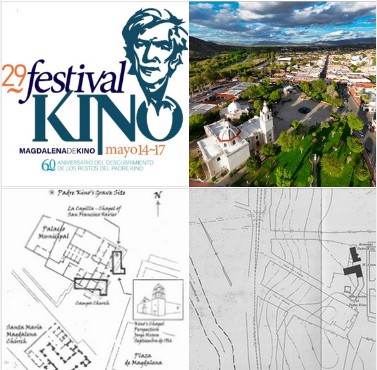
The 1966 topographic drawing (bottom right) created at the time of the Kino grave discovery project shows that the Kino Chapel and Campos Church were located on the highest ground with elevation contours showing a side of the hill sloping down to the left to the Magdalena River creating a defensive barrier. Today the railroad tracks of the Ferrocarril Mexicano run parallel along the river.
The photograph (top right) gives today’s view to the north like the topographic drawing does. The present Magdalena church built by the Franciscans in 1832 is in the foreground, casting its shadow on La Plaza Monumental Padre Eusebio Francisco Kino, a national monument of Mexico. The Kino Mausoleum is in the exact center of the photograph. The Kino Mausoleum is the site where Kino’s grave was discovered. It shelters Kino’s skeletal remains that are on public display. In the 1966 topographic drawing, the location of the present Magdalena church is the building outline just below the Monumental al Padre Kino.
The Kino Chapel and the Campos Church formed the earliest beginnings of Magdalena, staring with its plaza. The walls of the Kino Chapel and the Campos Church are aligned to the cardinal compass points: due north, south, east and west. Looking at the site plan (bottom left) and the topographic drawing (bottom right), the Kino Chapel was built perpendicular to the nave of the Campos Church and is oriented exactly north-south, and the Campos Church is orientated exactly east-west. Note that the Spanish Colonial buildings constructed after Kino’s death do not align with the cardinal compass points but are askew of them.
Kino was appointed by the Viceroy of New Spain as a royal cosmographer for the Atondo-Kino Expedition to The Californias (1681-1685). He fulfilled his duties as a map maker, surveyor and astronomer. Kino aligned the beginnings of his Magdalena mission settlement to the cardinal compass points as dictated by the town planning rules of the Law of the Indies. This was easily done by him with the use of his ever present scientific instruments, the sextant and compass, and his book of tables used in surveying and in astronomical and nautical observations.
More about Kino - the traza town planner, at the webpage Kino - Builder Architect, at https://www.padrekino.com/.../kino.../kino-architect-builder
Also view the traza sections in Olvera Grave Discovery Account. Link to web page is below.
2026 KINO FESTIVAL
This May communities throughout Sonora & Arizona will celebrate the 60th Anniversary of the 1966 discovery of Kino's grave. Kino is honored as a "Hero of Mexico" with his skeletal remains now displayed in a mausoleum on the site of Kino’s grave. The mausoleum is part of La Plaza Monumental Padre Eusebio Francisco Kino that is a national monument of Mexico.
The 2026 Kino Festival in Magdalena is celebrated from May 14 to May 17th with activities on May 19th that is the anniversary date of the discovery of Kino’s skeletal remains. On May 19th, there will be a celebratory Mass at the Santa María Magdalena mission church and afterwards a civil commemoration ceremony at the Kino Mausoleum. There will be a book presentation in the evening. The Kino Festival is the 2nd largest cultural event in Sonora and features theater, music and dance with talks, workshops and art. Magdalena de Kino is located less than 60 miles south of the U.S.-Mexico Border between Tucson and Hermosillo.
Finding Kino - 60th Anniversary
May 2, 2026
https://www.facebook.com/eusebio.kino.56/posts/pfbid0TLkfGQZFjcXv7hjuwXaW5Wck5QJLK3hHRuTTHzBwRcsMFMj9FwoBh4qCHJQHrhncl
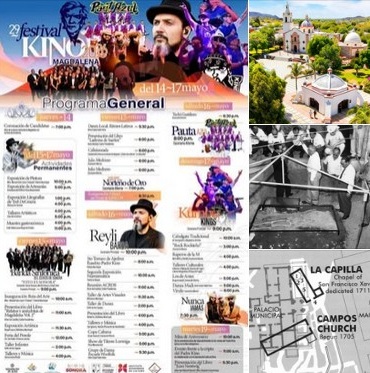
xx
FINDING KINO - 60TH ANNIVERSARY #5 - THE 29TH ANNUAL KINO FESTIVAL IN MAGDALENA, SONORA, CELEBRATES THE 60TH ANNIVERSARY OF FINDING FATHER KINO’S GRAVE AND SKELETAL REMAINS - FESTIVAL - MAY 14 THROUGH MAY 17 AND SPECIAL COMMEMORATIVE DAY - MAY 19TH.
On May 19, 1966, an international team cronistas from Sonora and Arizona together with scholars including archeologists, physical anthropologists and historians from Mexico's INAH and the University of Arizona found Padre Kino’s grave with his skeletal remains on May 19, 1966, in Magdalena, Sonora. Several months later, the Mexican Academy of History formally recognized their discovery.
This year celebrations throughout Sonora commemorate the 60th anniversary of the Kino grave discovery including the 26th annual Kino Festival in Magdalena. The Kino Festival that is held annually to commemorate the grave discovery and is the 2nd largest cultural event in Sonora.
It features a great diversity of exceptional performances and events: music including symphonic orchestra with opera divas, pop and rock groups; dance performances including O'odham traditional dances, folklorico and ballet; regional theater productions, local talent shows and a circus; together with talks, workshops and art exhibits; and the Sunday cabalgata from San Ignacio to Magdalena with the traditional horseback riders and the recent addition of bicycle riders - all joining in honor of our heroic Padre Kino and the discovery of his grave 60 years ago.
This year the Festival will be held from Thursday May 14 through Sunday May 17 with a special commemoration day on Tuesday May 19th.
A video well worth watching (1:25 minutes) that previews the wonderful line up of performances and events in Magdalena is at https://www.facebook.com/reel/1870730097076881
For information about the beautiful community of Magdalena de Kino, click
https://www.padrekino.com/.../magdalena-de-kino-sonora
Other communities in Sonora honoring Padre Kino with their own performances and events are San Ignacio, San Lorenzo, Ímuris, Santa Ana, Sáric, Átil, Oquitoa, Curcupe and Caborca.
LOWER RIGHT IMAGE
The drawing shows the locations of 5 of the most important burials and the dates of those burials. The excavation of these burials identified the location of the Kino Chapel and then helped identified Kino’s grave and skeletal remains.
A day before finding Kino’s grave, the discovery team uncovered the skeleton of Spaniard Salvator de Noreiga (Number 4). Noriega’s 1739 burial record documented that he was buried outside the front door of the Kino Chapel. This established that the team had found the first foundation of the “lost” Kino Chapel. Inside the Kino Chapel the burial of 90-year-old Indian Jose Gabriel Vega (Number 5) was uncovered. The 1837 burial record reported that Vega was buried midway in the chapel. As the digging proceeded in the chapel, Kino’s grave and skeleton (Number 1) were uncovered in front of location of the altar as Kino’s 1711 burial record indicated.
Finding Kino - 60th Anniversary
May 9, 2026
https://www.facebook.com/eusebio.kino.56/posts/pfbid02DMsGUNkVAEvFeryHpw7PnmnJXiwQ3CYMec5Sii6HAh1fEK9g99TNEhgHg5bLPNFDl
xx
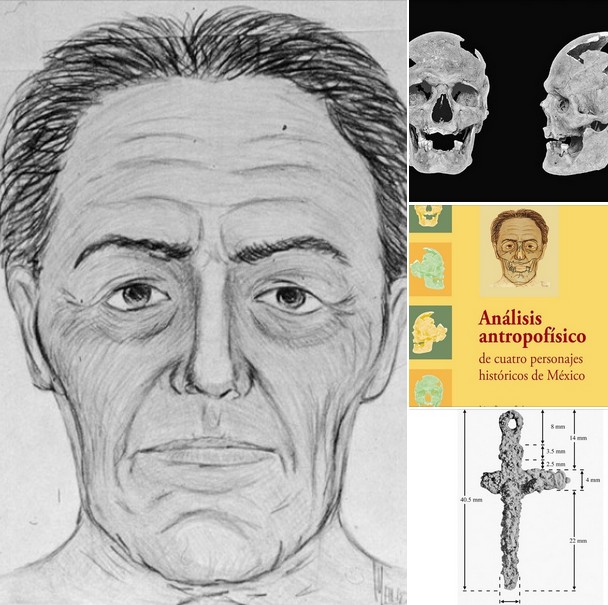
FINDING KINO #6 - 60TH ANNIVERSARY - WHAT DID PADRE KINO LOOK LIKE? DR. ARTURO ROMANO PACHECO, A WORLD RENOWNED PHYSICAL ANTHROPOLOGIST, GIVES US A PORTRAIT BASED ON KINO’S SKELETAL REMAINS AND FORENSIC SCIENCE. THE 1996 KINO DISCOVERY WAS THE IMPETUS FOR THE SEARCH FOR THE GRAVE OF KINO’S FRIEND - THE GREAT SAVANT SOR JUANA INES DE LA CRUZ.
What did our heroic Padre Kino look like? The best idea that we have of what Padre Kino actually looked like is a 1966 composite drawing of Kino’s facial features developed by Dr. Arturo Romano Pacheco (1921-2015) (left image). Dr. Romano was the world’s pioneer and leading expert in the reconstruction of the facial appearance of the dead based on his examination of the human skull and his knowledge of facial anatomy and physiology. He developed many of the methodologies that are used worldwide in this field that is called anthropological craniology.
Dr. Romano was the physical anthropologist on the international team of scientists, historians and cronistas that found Kino’s grave on May 19, 1996, in Magdalena, Sonora, Mexico. A laborer, while excavating a trench with Dr. William W. Wasley of the University of Arizona, accidentally put his pick through the top of Kino’s skull that was hidden under the soil [top right image]. Dr. Romano was then called in and began the slow process of excavating and preserving Kino's skull which led to uncovering the rest of his skeleton. A few days later and after the review of extensive evidence from various multidisciplinary perspectives, Dr. Romano with the rest of the team members agreed that they had found Kino. Two months later the Mexican Academy of History concurred and announced that Kino’s grave and remains were found.
The 29th annual Kino Festival is now underway in Magdalena celebrating the 60th anniversary of the Kino grave discovery. For a calendar of events, see https://www.facebook.com/eusebio.kino.56/posts/pfbid09To1xuGxPvsWY2Ve77kB1dUio3aQt5Gb7sQduY7AxR7AoxVvoRnPevzKhJ7xoHtbl?viewas=100000686899395
The 2012 book "Análisis antropofísico de cuatro personajes históricos de México" [Anthrophysical Analysis of Four Historical Figures Of Mexico] honor Dr. Romano by documenting 4 of the many archeological searches that Dr. Romano directed. After carefully uncovering the notable skeletons, Dr. Romano would then study their bones. He would determine the dead person’s gender, approximate age and cause of death together with the dead person’s lifetime activities and maladies. Also he could gain insights into the customs, diseases and other struggles of the society that the dead person lived in. The book’s discussion is technical but the photographs of Dr. Romano are astounding. The four historical figures that are examined are: Padre Kino; his friend - the great savant Sor Juana Ines de la Cruz; Miguel Ramos Arizpe; and a Mexica warrior.
An image from the book's cover [center right] shows part of the process of reconstructing Kino’s facial appearance. The process starts with a drawing of major facial features based on various photographs of Kino’s skull. Tissue and muscle are then drawn in based on expert knowledge of facial anatomy to create the composite drawing of Kino’s appearance. The discovery and analysis of Kino's bones is the book’s most extensive chapter.
In the book is Dr. Romano’s photograph of Kino’s Jesuit crucifix [bottom right image]. It was found lying on Kino’s collar bone. The length of the crucifix is 44.5 millimeters (about 1 inch and 5/8s). Also found was a button from Kino’s cassock on his upper sternum.
KINO’S DISCOVERY WAS THE IMPETUS FOR THE SEARCH FOR THE GRAVE OF SOR JUANA INES DE LA CRUZ. DR. ROMANO FOUND BOTH GRAVES.
The successful Kino discovery effort was the impetus for the federal government of Mexico to fund the search for another national hero of Mexico. In 1965, President Diaz Ordaz ordered Mexico’s Instituto Nacional de Antropología e Historia (INAH) to search for Kino’s grave. Then in 1971, President Echeverría Álvarez dedicated in Magdalena the newly constructed national monument of Mexico - the central plaza named in Kino’s honor with the Kino mausoleum sheltering Kino’s skeleton on the site of his grave. In that same year of 1971, President Echeverría Álvarez issued a presidential decree to find Sor Juana’s grave and to preserve her convent of San Jerónimo. It took another three years before the monumental archaeological effort started.
In his recent book “Un Cometa Llamado Kino,” Dr. Omar de la Cadena examines the friendship of Sor Juana and Padre Kino, and analyzes, for the first time, the influence that they had on each other’s writings and work. Sor Juana was recognized then and now as one of the greatest writers in Spanish and world literature. Also she is recognized as a savant for her poetry, plays, music and study of science. Sor Juana wrote a famous poem about Kino as he started his missionary career, setting out for today’s Baja California. For more about the friendship of Kino and Sor Juana including the text of the poem, see https://www.padrekino.com/.../kino-life/sor-juanas-kino-poem
For 7 years, from 1974 to 1981, Dr. Romano directed the excavations in Sor Juana's convent uncovering numerous graves and studying their burials. He found Sor Juana’s grave in 1978. So Kino and Sor Juana, not only shared a friendship during their lifetimes, but, after their deaths, their remains were found and analyzed by the same scientist - Dr. Romano.
In addition to his distinguished career as head of INAH's Department of Physical Anthropology, Dr. Arturo Romano Pacheco was Mexico’s leading forensic scientist and established Mexico’s first crime lab. He was a founding member of Mexico’s Academy of Criminology (AMC). He worked investigating homicides and other criminal cases throughout Mexico, but mostly in Mexico City. For a total of 8 years, he served 3 times as the director of Mexico’s National Museum of Anthropology.
Known for his uncompromising integrity and commitment to science, Dr. Romano would often repeat his credo - “bone does not lie. “
Finding Kino - 60th Anniversary
May 16, 2026
https://www.facebook.com/eusebio.kino.56/posts/pfbid0JKrYxoFEs2p18BRnjhMw2zTWAoamTgBkgGy7v5yvSvC4sRYJj1h7pqy64vHdduCnl
xx
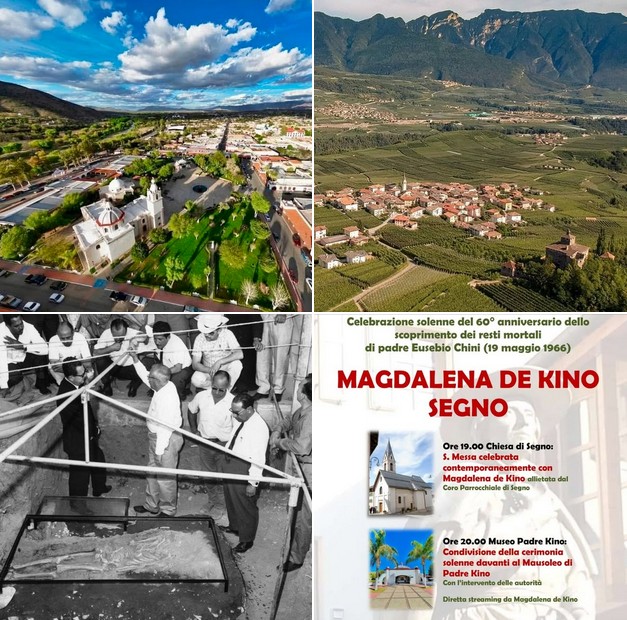
FINDING KINO - 60TH ANNIVERSARY #7 - THIS TUESDAY KINO’S BIRTHPLACE OF SEGNO, ITALY, JOINS VIRTUALLY ONLINE WITH MAGDALENA DE KINO, MEXICO, WHERE KINO DIED, THE COMMEMORATION OF THE 60TH ANNIVERSARY OF THE “MIRACLE” DISCOVERY OF PADRE KINO’S GRAVE. KINO GRAVE DISCOVERY ACCOUNT BY DR. BERNARD L. (“BUNNY’) FONTANA AT THE END OF POST.
In the late afternoon of May 19,1966, in Magdalena, Mexico, an international team of archaeologists, historians and cronistas found the lost but not forgotten grave of the heroic Jesuit missionary, Padre Eusebio Francisco Kino (1645-1711).
University of Arizona anthropologist and historian Dr. Bernard L. (“Bunny”) Fontana wrote: “That Kino's remains were discovered in 1966 has to be regarded as miraculous. The same might be said for the continuation of so much that he set in motion in northern Sonora/southern Arizona more than three centuries ago.”
Kino’s lost grave barely escaped destruction when the Palacio Municipal (City Hall) was being built in the 1890s. Again it escaped destruction when its bell tower was added in 1910. This is one aspect of the grave discovery that Dr. Fontana described as "miraculous."
The other miraculous part is the continuation of what Kino "set in motion" or what I call his living legacy. One aspect of Kino's living legacy is the 300 year old Magdalena pilgrimage to Kino's San Francis Xavier chapel and his grave site. The pilgrimage began after Kino's death in 1711.
The Magdalena pilgrimage is a continuation of Kino's personal magnetism. He attracted the indigenous peoples of the region. who traveled to see him at his various missions. Some walked over 200 miles from their homes on the Gila River and the Colorado River. The O'odham people would travel year round to Kino's missions to help him build churches and plant and harvest crops, round up cattle and take part in fiestas. Kino's goal was to bring peace to the Sonoran Desert and create safe passage for the various tribal communities.
Discovery team member historian Father Cruz Acuña wrote of that late afternoon moment of discovery: “Dr. Romano said: I think we have found him. . . . Professor Olvera, somewhat nervous, remained silent, or I didn't hear what he said. Dr. Wasley [University of Arizona archaeologist], in spite of his scientific and critical spirit, uttered the phrase: "It is like a dream." Sánchez de la Vega was the only one who smiled absolutely sure and satisfied ...”
Jorge Olvera, INAH archaeologist and architectural historian, added his own memories. He writes that at that moment he said in a near whisper "Look! This is a 17th-century cross on his [Kino’s] left clavicle!" Olvera then describes the state of mind of Kino cronista Gabriel Sánchez de la Vega. His mind was one of calm assurance. Sánchez de la Vega reflected on his many years of trying to find Father Kino in non professional efforts like several sponsored by the Lions Club of Magdalena. Now working with some of the best archaeologists and historians in the world, Kino's grave with his skeletal remains had finally been found.
Tomorrow's ceremonies (May 19, 2026) in Segno, Italy (top right image), where Kino was born, will join via the internet with the ceremonies in Magdalena de Kino, Mexico (top left image), where Kino died, in observance of the 60th anniversary of the Kino grave discovery. Simultaneously there will be two Masses of Thanksgiving said in Magdalena’s church of Santa María Magdalena (10 AM) and in Segno’s church of the Natività di Maria (Nativity of Mary) (7 PM). Immediately afterward there will be a joint civil ceremony at the Kino Mausoleum in Magdalena and the Kino Museum and Cultural Center in Segno.
More about Segno, where Kino was born, at https://www.padrekino.com/.../Kino-birthplace-segno-kino...
More about Magdalena de Kino, where Kino died and where today his remains are displayed in a mausoleum that is a national monument of Mexico at https://www.padrekino.com/.../magdalena-de-kino-sonora
______________________________________________________________
KINO GRAVE DISCOVERY ACCOUNT BY DR. BERNARD L. (“BUNNY’) FONTANA
On February 14, 1965, on the fifty-third anniversary of Arizona's admission to the union as a state, a larger-than-life-size bronze statue of Father Eusebio Francisco Kino was dedicated and presented as the last of Arizona's two representatives in the Rotunda of the United States Capitol. (The other is a statue of copper magnate John C. Greenway). Among the distinguished guests at the unveiling and dedication ceremony was the Honorable Hugo Margin, ambassador from Mexico. It was possibly the ambassador who alerted Mexican President Gustavo Díaz Ordaz that Americans were paying singular homage to a man who belonged as much to Sonora and Mexico as he did to Arizona and the United States.
Soon after, President Díaz Ordaz charged his Secretary of Public Education, Agustin Yáñez, with the task of locating and positively identifying Father Kino's mortal remains, a job which the secretary assigned on June 30 to Professor Wigberto Jiménez Moreno, head of the Department of Historical Research of Mexico's National Institute of Anthropology and History.
Beginning in August 1965, a half year after the statue's dedication, an international team of investigators headed by Jiménez Moreno arrived in Magdalena, where it was known Father Kino had died in 1711, to begin the search on the ground. It was a hunt that had gone on sporadically at least since 1922 when Bishop Juan Navarette tried without success to locate the grave site.
In addition to Jiménez Moreno, the principal investigators were Jorge Olvera H., an art and architecture historian with a background in archaeology; Arturo Romano P., physical anthropologist; Jorge Angula, archaeologist; Sonoran historians Fernando Pesqueira and Father Cruz Acuña; cartographer Conrado Gallegos; chemist Gabriel Sánchez de la Vega; and Americans William W. Wasley, archaeologist, and Father Kieran R. McCarty, O.F.M., historian.
As work proceeded, it became known from documentary and published sources that Father Kino had died at the age of sixty-five on the night of March 15, 1711, and had been buried on the Gospel side of the altar between the second and third ashlars (foundation stones) in the new chapel he had just dedicated to San Francisco Xavier. It was also learned that the year after Kino's death two other Jesuits were exhumed from their original burial places in Tubutama and their bones, in a jumble, were reburied on the Epistle and Gospel sides of the church. In 1739, Spaniard Salvador de Noriega was buried at the entrance to the chapel. and in 1837, José Gabriel Vega was buried beneath the nave. In 1828, Father José Pérez Llera had put a stone buttress next to part of the slumping east wall of the chapel.
As work in archives and libraries proceeded, so did work in the field. Members of the team looked carefully at the construction materials and techniques used at the ruins of Remedios, a church known to have been built by Father Kino. So did they examine the adobe walls and stone foundations at Cocospera and carry out excavations in Magdalena in places where earlier excavations had occurred, and where their own sense of the unfolding evidence took them.
Finally, it was Jorge Olvera and his expert reading of three nineteenth-century depictions of Magdalena - those by John Russell Bartlett (1852), John Ross Browne (1864), and Alphonse Pinart (1879) - that enabled the excavators to zero in on the most likely location of Father Kino's chapel. These drawings indicated the location of Father Agustín Campos's 1705 church in relation to the 1832 church of Father Pérez Llera (the one presently in use), and to Father Kino's chapel. The location of the latter proved to be in an area immediately next to the city hall.
On May 19, 1966, Father Kino's bones were found. He lay undisturbed on the Gospel side of the altar between the second and third ashlars precisely as he had been buried some 255 years earlier. Near him were the secondary burials of the two Tubutama Jesuits, and in the nave of the chapel and just beyond its entrance were the primary burials of 1739 and 1837. Father Pérez Llera's buttress was against the outside of the east wall. Examination of the skeleton, moreover, revealed a European male who was at least sixty years old, showed signs of arthritis (Kino had trouble writing and riding in his later years), and who, unmentioned in the documents, had lost two central incisors long before he died (the tooth sockets had grown over). His coffin was gone, but a simple cassock button remained on his breastbone and a small crucifix lay on his collarbone.
The discovery of Father Kino's remains transformed Magdalena. Its name is now officially Magdalena de Kino and the archaeological remains of Father Campos's early eighteenth-century church, was completely redesigned by architect Francisco Artigus and rebuilt in 1970 and 1971 as the beautiful memorial plaza seen there today.
Bernard L. Fontana
"Finding Father Kino"
"The Pimería Alta - Missions and More" 1996
Finding Kino - 60th Anniversary
May 18, 2025
https://www.facebook.com/eusebio.kino.56/posts/pfbid0w13t6qFdKjV3fcMUKLiRr3LmBwX52q1CLm1a8exC7JHQgSXCnevLEyztRXNcbfbwl

xx
Site of Kino Grave Discovery with Kino skeletal remains covered by the large glass case in Magdalena Sonora in May 1966. Kino’s skull was removed from his skeleton to the laboratory for study. The reinterred remains of Father Manuel González is covered by the small glass case. From right to left: team member Dr. Arturo Romano Pacheco, director of the Department of Physical Anthropology, Mexico’s Instituto Nacional de Antropología e Historia (INAH), physical anthropologist and archaeologist, is on far right, partially in the photograph; Gerardo Nava García with tie, Mayor of Magdalena; team member Dr. William W. Wasley, archaeologist, University of Arizona, wearing sun glasses; Dr. Wiberto Jiménez Moreno, director INAH Department of Historical Research, anthropologist and leader of the team, with his arm up; Luis Encinas Johnson, Governor of the State of Sonora. Photograph from Tucson Citizen May 25, 1966, Page 1
Finding Kino - 60th Anniversary
May 18, 2026
https://www.facebook.com/photo?fbid=4219957938257344&set=a.1382269505359549
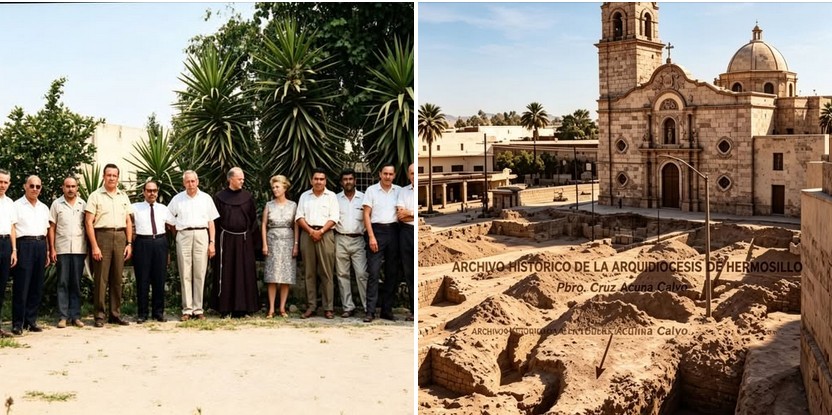
xx
FINDING KINO - 60TH ANNIVERSARY - ENHANCED PHOTOGRAPHS SHOWING DISCOVERY TEAM MEMBERS AND SITE OF KINO GRAVE IN MAGDALENA CENTRAL PLAZA WITH EXTENSIVE ARCHAEOLOGIC EXCAVATIONS AND BACKFILL.
The photograph shows the Kino Grave Discovery Team with others members of the team after the discovery.
From Left to Right: Dr. Walter H. Birkby, physical anthropologist and forensic scientist, University of Arizona, who after the discovery helped Dr. Romano Pacheco preserve the Kino skeleton and grave site; Discovery Team Members: Dr. William W. Wasley, archaeologist, University of Arizona, wearing sunglasses; Dr. Jorge Olvera H., art historian and ethnohistorian, Mexico’s Instituto Nacional de Antropología e Historia (INAH); Dr Arturo Romano Pacheco, physical anthropologist, archaeologist and forensic scientist, Director of the Department of Physical Anthropology INAH; Gerardo Nava Garcia, Mayor of Magdalena; Dr. Wiberto Jiménez Moreno, anthropologist and ethnohistorian, Director of Historical Research INAH and Kino discovery project leader; Rev. Kieran R. McCarty, O.P.M., one the team historians and Franciscan pastor of the chain of Kino mission churches in the Altar River Valley and Mission San Xavier del Bac in Tucson; Juanita Ruíz, cronista from San Gabriel, California who showed Jorge Olvera the original J. Ross Browne water color painting that was in the Amelia restaurant in Caborca; and Gabriel Sánchez de la Vega, Magdalena cronista and team member. Remainder of the people pictured are unidentified.
Other team members not identified or not shown include Father Cruz Acuña Galvez and Topographical Engineer Conrado Gallegos.
The enhanced photograph with the addition of the arrow showing the site of Kino’s grave discovery in the central plaza of Magdalena was published on the front page of the Tucson's Arizona Daily Star newspaper on May 25, 1966. It was also published in a Hermosillo newspaper on May 25, 1966. The street lamp is good marker to fix the location of the grave site in other photographs.
The photographs are enhanced by Francisco Xavier Flores Silver from the historical photographs taken by photographer Samuel Arreola of Magdalena with the permission of the Arreola Valle family.
The enhanced photographs were cropped for this post’s presentation purposes from posts by Francisco Javier Flores Silver: original photographs in original sizes of team members at https://www.facebook.com/photo?fbid=10238550383316248&set=pcb.10238550387876362 and photograph showing site of Kino grave discovery in the Magdalena Plaza at https://www.facebook.com/franciscojavier.xavi/posts/pfbid08Hm1xXCAjktUVHWj5qAeuSye6DdJ6R1sR35xtwnXXxeqFyBcLddFgt4W946W2hhUl
Thank you Francisco Javier Flores Silver whose posts of his photographs and accounts of the history and daily life of Magdalena de Kino is greatly appreciated. Thank you Javi. Javi's Facebook posts are at https://www.facebook.com/franciscojavier.xavi
Finding Kino - 60th Anniversary
May 21, 2026
https://www.facebook.com/eusebio.kino.56/posts/pfbid0gXScEFa6Lj8FjbHc67yPcgg2kjyVakHzRGC7BB1SwBjpV9nZPxfitBE7JwL9YcYbl?viewas=100000686899395
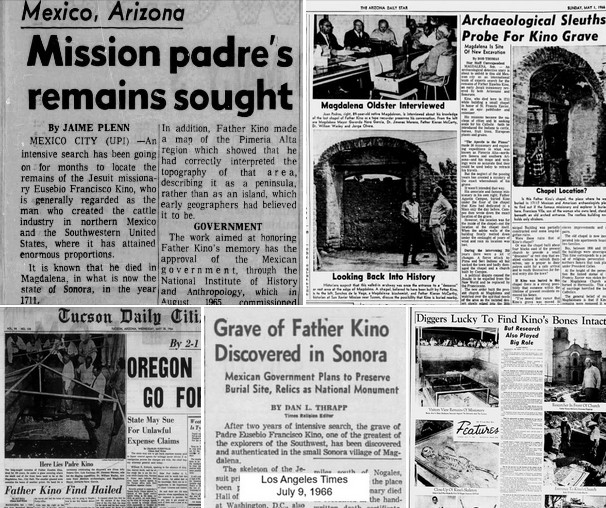
xx
FINDING KINO - 60TH ANNIVERSARY # 8 - SEE BELOW FOR THE BEST NEWSPAPER ARTICLE ABOUT KINO GRAVE DISCOVERY BY BOB THOMAS.
TODAY, 60 YEARS AGO, ON MAY 24, 1966, SONORAN GOVERNOR LUIS ENCINAS JOHNSON PUBLICLY ANNOUNCES KINO IS FOUND.
DISCOVERY TEAM UNDER MEDIA SPOTLIGHT - BEFORE AND AFTER FINDING KINO.
Today, 60 years ago, Luis Encinas Johnson, the governor of the State of Sonora, announced to the public over the radio from Magdalena that the skeletal remains of Padre Kino were found. The 4 day delay after the grave discovery team determined they had found Kino's grave, allowed the grave site to be secured and guarded by the Mexican army. As anticipated, thousands of people from Sonora and Arizona flocked to Magdalena to pay homage to our heroic Padre Kino. Last year I wrote a post about two of these Kino pilgrims from Arizona. Then 14 year olds Bobby Ronstadt and Rick Murphy traveled with their fathers from Tucson to view the Kino grave and his skeletal remains. See https://www.facebook.com/eusebio.kino.56/posts/pfbid0BRVBFTzT4iGAV3R6LNVBfqe3yUe9Qz7YbpQgDLL8FGgZpMryBUqNCZQqqjZNhKTTl
DISCOVERY TEAM UNDER MEDIA SPOTLIGHT - BEFORE AND AFTER
On this post are newspaper articles published in the United States that are examples of the press coverage of the Kino grave discovery. See the text of the best article about the Kino grave discovery below by Bob Thomas. The article's first half is Kino biography and the second half is about the grave discovery. Soon, in a day or so, you will be able to see and read these articles in their entirety on the Kino website at (www.padrekino.com ).
Two months before the discovery, the press in both Mexico and United States were following what was called “the crazy project.” INAH archaeologist and architectural historian and team member Jorge Olvera wrote that some people even felt that President Diaz Ordaz had “a screw loose” for ordering his top INAH staff in Mexico City to go to the frontier state Sonora to find Kino. In this media spotlight environment, the discovery team was always working under scrutiny of the people of Magdalena and that of the press. This archaeological dig was very unusual situation one because for the most part was done in public in the central plaza of Magdalena.
Just a week before the discovery occurred, a leading Spanish colonial historian condemned the project in a large circulation Mexico City newspaper. The article’s headline was “The Remains Of Father Kino Will Never Be Found.” And then there was someone in Magdalena who would make their own public statement in a criticizing the team in a different way about the lack of progress in finding Kino. When the discovery team was eating at a restaurant, someone would play on the juke box the then popular song “La Banda Esta Borracha (The Band is Drunk). You can judge for yourself the degree of criticism by listening to Mike Laure’s version of the song at https://www.youtube.com/watch?v=WclkOKAYNGQ
Before the start of the second season of excavation in late April 1966, the veteran UPI (United Press International) bureau chief, Jamie Plenn, under his byline, wrote about the discovery effort (top left image). The article was published by many newspapers across the United States as subscribers to the UPI news service. At that time UPI was an international news agency that provided news materials to over 6,000 newspapers, magazines, radio and television stations. A copy of the UPI article is from the Peninsula Times Tribune that served the San Francisco Bay Area of California. (April 6, 1966 - “Mission padre's remains sought: Mexico, Arizona”).
The larger Tucson newspapers, the Tucson Citizen and the Arizona Daily Star, had extensive coverage of the team’s work once excavations restarted in early April 1966. The article (top right) by the Arizona Daily Star (May 1, 1966 - “Archaeological Sleuths Probe For Kino Grave”) is a good example of their continuing coverage. This article gives an idea of the different activities of the team: interviewing, researching in the archives and digging. The Citizen and Star newspapers must have had their reporters living in Magdalena so they could be the first to write about every new development.
When the discovery team found Kino’s skeletal remains on May 19, 1996, the team kept it secret and did not tell reporters. The reporter for the Arizona Daily Start could only write that a skeleton was found. (May 19, 1966 - “Search For Kino Grave Spurred: Coffin, Bones Found Near Old Foundation at Entrance of City Hall”). I wonder whether the headline writer was really thinking of using the word “spurned” instead of “spurred” since the reporter Bob Thomas was not given any information by the team although he wrote about what he observed.
When Governor Encinas Johnson made his announcement about the discovery, newspapers in both Mexico and the United States gave the Kino grave discovery even more coverage. The San Francisco Chronicle and the Houston Chronicle reported the discovery the day after. Two weeks later, the Los Angeles Times published a long article (bottom middle) with photographs and drawings (July 9, 1966 - “Grave of Father Kino Discovered in Sonora: Mexican Government Plans To Preserve Burial Site, Relics As National Monument”). There was a summary of the story on the front page that then referred the reader to the main story in the inside pages.
In the article is an interview with Juanita Ruiz who supplied some of the photographs and a diagram of the location of the Kino Chapel, Campos Church and City Hall. The article tells about Juanita's participation in the discovery effort: 'This year the "hunt got under way April 29, according to Mrs. Juanita Ruiz, 5013 N. Bartlett St., San Gabriel, for many years an aficionado of the history and archaeology of Sonora. "I happened to be there when work commenced this year, and I remained there every day until the discovery was made," she said. Always Underfoot [sub headline] "I guess I was always underfoot. But the scientists came to tolerate me.” She took dozens of photographs and drew charts of the progress of the excavations, and kept a field notebook, recording in it measurements, names, discoveries and everything bearing on the search.' On pages 46-47 In Jorge Olvera's book "Finding Father Kino ..." Jorge writes that Juanita Ruiz showed original water color of Magdalena by J. Ross Browne and provided copies of it. Also the discovery team wrote a letter of introduction for Juanita to the Huntington Museum in California.
The Los Angeles Times' article was written by the Los Angeles Times religion editor Dan L. Thrapp (1913-1994). Later Dan would become a pre-eminent historian of the American West. Dan would write the four-volume “Encyclopedia of Frontier Biography” and author several books about the United States-Mexico Borderlands.
As discussed above, the newspaper article (bottom right ) was published a month later by the Arizona Daily Star in its Sunday Features section. It is the best newspaper account of the discovery that I have read. (July 17, 1966 - “Diggers Lucky To Find Kino's Bones Intact: But Research Played A Big Role”). I highly recommend it.
After the discovery, there were many Kino talks and events in Tucson and Southern Arizona. University of Arizona professors Dr. Bernard L. ("Bunny" Fontana, Dr. John A. Carroll gave talks together with Kino discover team member Wilberto Jimenez Moreno. Dr. Carroll was broadcast the public television in Tucson, KUAT-TV.
Gilbert Ronstadt, the father of the famed singer Linda Ronstadt, as "El Jefe" of Caballeros del Sol, led a tour of the Kino Missons in Sonora for the Tucson organization's community promoters. Gilberto was a co-chairman of the committee that erected the 3 duplicate Kino “Padre on Horseback” statues in the late 1990s in Segno (Kino's birthplace), Magdalena de Kino (Kino's place of death and grave site) and Tucson, Arizona. Gilbert's father Fred left his family living in Magdalena at age 14 in 1882 to make Tucson his home for the rest of his life.
The broadcast television station KGUN (Channel 9) had special 3 minute news segments celebrating Kino during the week of Kino’s birthday on August 8th. These segments lead to a 30 minute program about Father Kino, filmed in color, that was broadcasted by KGUN television on Saturday afternoon on New Year’s Eve 1966. The local news anchor Mac Marshall hosted the program and interviewed discovery team member and historian Father Kiernan McCarty, O.F.M. The program would go to win a national award for documentary excellence. See COMMENT for newspaper photograph.
____________________________________________________________
BEST NEWSPAPER ARTICLE ABOUT KINO GRAVE DISCOVERY
BY BOB THOMAS
FEATURES
The Arizona Daily Star
Section One - Page One
Sunday July 17, 1966
[Most of the photographs of the article are in the image in the bottom right of the post]
[Beginning of Article]
DIGGERS LUCKY TO FIND KINO'S BONES INTACT:
BUT RESEARCH ALSO PLAYED BIG ROLE
By BOB THOMAS
MAGDALENA DE KINO, Son. -The skull was different from all the rest.
Brown colored and newly freed from the damp soil, it was thick where an Indian skull was thin, long where a Spanish skull was round.
To Prof. Arturo Romano, it looked exactly like a textbook picture of a Cro-Magnon man's skull.
"Extraordinary, extraordinary." Romano muttered in Spanish, as he carefully brushed dirt off the skull.
The discovery was in the center of this city of 20,000 -- right in front of the city hall and under the street that circled the plaza.
What Dr. Romano was enthused over proved to be the skull of the famed Italian Jesuit, Father Eusebio Kino-- lost for 255 years until found by a joint American-Mexican team of archeologists and historians last May.
Kino was a giant in an age of heroic missionaries. In a place unknown to the rest of the world and in a time in which Spanish explorers still thought California to be an island, Kino performed miracles.
He criss-crossed the desert on more than 50 exploring expeditions, mapped Sonora and southern Arizona, determined that Baja California was not an island, introduced cattle and European plants and grains and converted thousands of Indians.
During his 24 years in Pimeria Alta he traveled over 50,000 miles, founded 24 missions (San Xavier, Guevavi, and Tumacacori in Arizona), 19 rancherias and many visitas, or stopping places for the preaching of the gospel. Using only the most primitive tools Kino produced so accurate maps that they can be followed today with little trouble. His placing the name of an Indian spring or water hole on his maps resulted in this state being named Arizona.
Of fantastic endurance, Kino often made horseback rides 90-mile non-stop only to stay up all night upon arrival praying and flogging himself as punishment of what he considered his sins. He habitually fasted, gave away all his goods to his Indian converts and preferred to sleep on the hard ground rather than a bed.
When he approached an Indian settlement he was met by huge crowds of cheering Indians waving home-made crosses, scattering flowers and throwing fronds in his path. Even today his memory is so revered the Indians that they make annual pilgrimage to Magdalena, some walking barefoot or on their knees to fulfill a religious vow.
But, since his death on March 15, 1711, his burial place has been forgotten and lost.
The discovery was both extremely lucky and the result of thorough, painstaking preparation. It was lucky because Kino's bones were found just a few feet from the foundation of the City Hall, which was built in 1882 -- hardly the time when the builders would have paid attention to some old bones.
Actually Kino's remains were bypassed by a number of construction projects - the establishment of the street in front of the City Hall, sidewalks on all four sides of him and a tree that was planted directly over his grave. The daily watering of this tree would have been to decay any ordinary bones. Kino's long, enough heavy bones the heritage of his northern Italy peasant stock, survived.
But the real story, a sort of an archeological detective story, was the way Kino's discoverers researched the problem before a shovel full of earth was turned.
It was pretty well determined that Kino was buried in Magdalena. According to official church records of Father Augustin Campos Kino, was buried "on the gospel side of the alter" under the floor of a small chapel he had dedicated to his patron saint, St. Francis Xavier, just hours before his death.
But the big question was the location of this chapel. In the passage of 250 years, the adobe walls of the chapel had melted down. Even the first Magdalena church, built by Father Campos, had disappeared.
What was once a small outpost of Christianity and Spanish colonization was now a modern city of homes, businesses and streets.
At either end of the town plaza with its typical small bandstand or kiosko were the two heartbeats of Magdalena the temporal city hall and the spiritual church.
It was at the church, a rather unimpressive structure faced with concrete block, that the search began.
“We knew, from old drawings by J. Ross Browne and Alphonse Pinart (1864 and 1879 respectively) that the old chapel was close to the present church," said Jorge Olvera, Department of Historical Research of the National Institute of Anthropology and History.
“We lined up the physical features of the surrounding hills, interviewed the oldest residents and researched old church documents. From previous excavations inside and beside the present church we knew there were some ruins nearby so we began to follow them."
Starting from the front of the church the searchers gradually unearthed the foundations of an L - shaped building. An American, Father Kieran McCarty, Franciscan priest at San Xavier Mission near Tucson and a former vice president of the Academy of American Franciscan History in Washington, D.C., combed the archives of the Jesuit college near Mexico City and found documents showing that the building was once the first school to be built in northern Sonora.
Next, the diggers under the supervision of Dr. Wigberto Jimenez Moreno, director of historical research for the National Institute, found some curious adobe and rock foundations about midway between the church and the city hall.
Dr. William Wasley, archeologist with the Arizona State Museum on the University of Arizona campus, identified the foundations as Jesuit construction.
Dr. Jimenez Moreno, who from the beginning had maintained that Kino would be found near the plaza, said the ruins could be that of Campos' church. To make sure diggers sank trenches laterally, gradually turning the park like plaza into what looked like jumbled battlefield.
Trenches undermined the Kino memorial, raised on the 300th anniversary of Kino's birth, isolated curio and religious shops and even burrowed in the city jail behind city hall.
There an ironic discovery was made. Two ancient rifles, badly rusted and without stocks, were found buried in the jail courtyard. Obviously someone had cached them there to be used in a jailbreak. What went wrong is not known but the guns lay undisturbed until Kino's searchers came along.
As the diggers uncovered more and more of the old foundations (which proved to be Campos' church) they struck another foundation wall.
This wall, of typical Jesuit mud and rock construction, was so close to the surface that the street grader shaved off the top.
Olvera, walking down the dirt street in front of City Hall before the excavations started, noticed a straight line of rocks slightly protruding above the surface and surmised they might mark a foundation.
The diggers struck paydirt almost immediately. Next to what was later found to be the south-facing entrance of the chapel, they found the bones of an adult male European- type buried in a wooden coffin.
This matched the church records of Campos who wrote that he buried a Spanish colonist outside the chapel entrance. It was the custom in those days to bury priests and high
(Continued on Page 2B, Col. 1 1)
THOROUGH RESEARCH JOB
(Continued From Page 1B)
officials under the floor of churches because it was consecrated land and others outside the church, the distance depending on their importance.
Soon, the walls emerged, other bones were found, most of them infants or children under the age of 15.
But the searchers were running out of space. Three-quarters of the old chapel were outlined and it appeared that at least one corner of the ruin had been obliterated by the foundations of the City Hall. If Kino was buried there little could be expected to be found.
Then, with dramatic suddenness, a worker's pick drove down into the moist earth under a tree. It pierced Kino's skull, opening a large hole. Prof. Romano, watching, yelled and jumped into the hole. Carefully the rest of the skeleton was uncovered.
Working slowly, the rest of the surrounding earth was removed and two more skeletons on either side of Kino were found. Both the latter skeletons were incomplete.
This again matched Campos' records. He described that after burying Kino he went to the mission of Tubutama and exhumed the bodies of two other priests buried there, Fathers Manuel Gonzalez and Ignacio Iturmendi, and reburied them on either side of Kino.
Kino's bones were in the rotted remains of a wooden coffin. There were no garments found - probably due to the damp soil - and the only items recovered were a shell button and a bronze crucifix an early Jesuit type.
Beside the location of Kino's bones the searchers also cited the positive evidence of a buttress known to be reinforcing one wall and the exact north-south position of the chapel.
The announcement that Kino's grave had been found created intense interest. Sonora Gov. Luis Encinas personally made the announcement to the peals of church bells. Around the clock guards had be posted around the site to keep the curious and religious faithful from damaging the bones.
Day after day a solid string of high Mexican officials journeyed to Magdalena to view the find. Mexico declared the site to be a national monument. Magdalena city officials voted to change the name of the city to Magdalena de Kino.
The papal apostolic delegate, Luis Raimondi, in Mexico City, made a special trip to see the bones.
Plans are now being worked out to erect a special memorial building over the foundations of the chapel with viewing windows over the graves of the three priests.
Now the bones are protected by a ramada and glass cases surrounded by a block wall. The City Hall building and jail will be moved to another location.
[End of Article]
[see comment below]
Finding Kino - 60th Anniversary #8
May 24, 2026
https://www.facebook.com/eusebio.kino.56/posts/pfbid02TDKsmQLRB67NqxMQ5HdhjKxAWEAPA9pGyrGZrvHcLnFuPfBx5QCzr6H8mEL8Jf1tl

xx
COMMENT
Father Kino Television Special 1966. A 30 minute program about Father Kino, filmed in color, was broadcasted by KGUN television on Saturday afternoon New Year’s Eve 1966. The local news anchor Mac Marshall hosted the program and interviewed discovery team member and historian Father Kiernan McCarty, O.F.M. The program would go to win a national award for documentary excellence. Photograph from Tucson Citizen December 31, 1966 page 31.
Comment
Finding Kino - 60th Anniversary #8
May 24, 2026
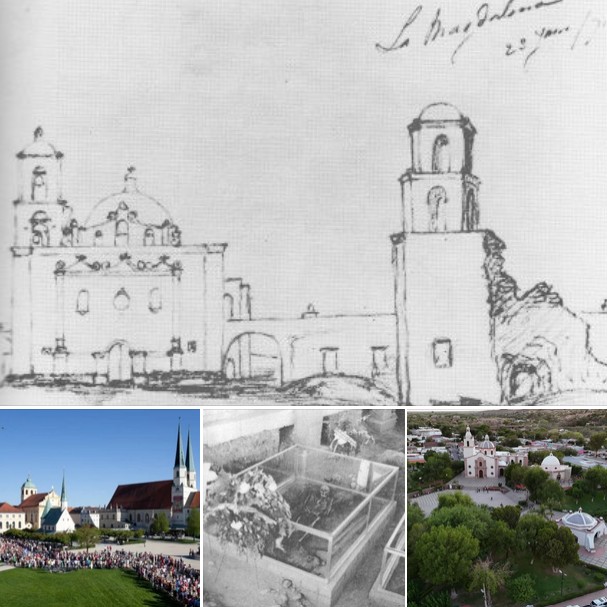
xx
FINDING KINO - 60TH ANNIVERSARY #9 - KINO’S VISION OF THE POWER OF PILGRIMAGE FULFILLED - HIS TWO PILGRIMAGE CENTERS HONORING SAINT MARY MAGDALENE - ALTOTTING, GERMANY WHERE KINO AS A NEWLY ORDAINED PRIEST WAS FIRST ASSIGNED, AND IN MAGDALENA, MEXICO, WHERE KINO DIED A FEW HOURS AFTER DEDICATING THE CHAPEL THAT BEGAN 300 YEARS OF PILGRIMAGE TO MAGDALENA. THIS TUESDAY, JUNE 9, 2026, IS THE 60TH ANNIVERSARY OF THE DEDICATION OF KINO’S GRAVE DISCOVERED WITHIN THE EXCAVATED CHAPEL.
KINO’S VISION OF THE POWER OF PILGRIMAGE FULFILLED.
Kino experienced the power of pilgrimage when he ministered to pilgrims as a newly ordained priest at the great European pilgrimage center in Altotting, Germany at the church named in honor of Saint Mary Magdalene (bottom left image). He knew the long walk to a pilgrimage destination transformed the lives of individual pilgrims. He knew how pilgrimage created a bond of solidarity among pilgrims belonging to far-flung diverse communities. And that these bonds of solidarity would unite the diverse peoples and extend into the areas of economics and politics.
Ten years later, after working in Spain and Baja California, Kino was assigned to the Pimería Alta, today’s Arizona-Sonora Borderlands. One of his first acts in the Pimería was to name the O’odham village of Buquivaba in honor of the great saint Mary Magdalene, known as the 13th apostle. Also by naming the village that is now Magdalena de Kino, Sonora, Kino would be reminded every day of his work at Altotting and the power of pilgrimage.
Kino also named the mission at the O’odham village of Cocóspera in honor of Nuestra Señora del Pilar y Santiago that honors the Virgin Mary’s appearance to the apostle Saint James in Compostella, Spain. Compostella is the pilgrimage destination of the Camino de Santiago. This more than 1,000 year old pilgrimage is the subject of the 2011 movie “The Way” starring Martin Sheen. Also the Santa Cruz River was first named by Kino as the Río de Santa María del Pilar before the Spanish changed the river's name to the Río de Santa Cruz when they militarily occupied the Pimería 30 years after Kino’s death.
Twenty-four years after he arrived in the Pimeria and on the last day of his life, Kino realized in the Pimería his vision of the power of pilgrimage. His last public act as a missionary father was to dedicate a chapel in Magdalena that he built to honor his patron saint, the Jesuit missionary Francis Xavier (top image). Immediately after Kino’s death, Magdalena became the destination point for pilgrimages that have continued for more than 300 years. In the first century of the Magdalena pilgrimage, the Kino Chapel became the focus of the pilgrimage before it completely fell down. The exact location of the chapel and Kino’s grave was lost but not forgotten.
Kino died in Magdalena, Sonora, in 1711, a few hours after he collapsed during a Mass that he was saying in dedication of the chapel (image bottom center). Kino was buried under the chapel’s floor in front of the statue of the reclining Francis Xavier that he brought. When he was age 18 living in Europe, Kino was close to death from an illness. He prayed to Francis Xavier and promised that if he recovered he too would become a missionary father like Xavier. At this death, Kino became the first Magdalena pilgrim to fulfill a pilgrimage manda (promise) that he made to Xavier.
The O’odham people after Kino’s death walked long distances to Magdalena, as they still do, to remember and honor their friend Kino. During Kino’s lifetime, the Indian people would travel, sometimes up to 300 miles from their home villages, to help Kino roundup cattle, plant and harvest wheat, build churches and celebrate fiestas. The Magdalena pilgrimage was a continuation of the movement throughout the region of the O’odham and other indigenous people to Kino during his lifetime. Later non indigenous people would join the pilgrimage and its fiesta. Now over 10,000 people in the early Fall season make the pilgrimage to Magdalena and celebrate its October fiesta.
The only image of the Kino chapel that exists is the 1879 drawing of the dilapidated chapel by adventurer, artist and thief Alfonso Pinart. (top image). In the background of the drawing is the Santa Maria Magdalena church built in 1820 by the Franciscan missionaries. That church continues to be a parish church as seen in the bottom right image. The chapel collapsed either during the dynamiting for new Pacific coast railroad around 1881 or it collapsed during great regional earthquake centered near Bavispe in 1887. The mound of dirt to the left of the chapel's tower is the remnant of the church that was built by Father Campos in 1705.
The practice of pilgrimage is a central feature of all the world's major religions. No matter the culture or the religion or the time in history, it is recognized that pilgrimage provides an opportunity for the individual pilgrim to heal the mind and body, to gain inner peace and a new perspective on life or maybe just to have an adventure away from home. The universal human appeal and the power of pilgrimage is brought to its essence by a simple question that a pious man asked the poet Anne Carson on her way to Compostela. He asked her "How can you see your life unless you leave it?"
The practice of pilgrimage creates a bond of solidarity among pilgrims belonging to far-flung diverse communities. It also creates economic unity with an essential part of the pilgrimage experience is the trade fairs and fiestas held at the pilgrimage destination. Kino knew that the creation of these bonds and trade relationships were essential to bring peace to the often violent Pimería Alta.
Kino’s primary goal as a missionary father was to make the Indian mission villages into self-sufficient Christian utopian communities where Native people could survive Spanish colonialism and thrive. Kino writes, "[T] the greatness of new missions will shine not only in the eternity of heaven, but also in the most desolate and remote regions of the world. It will live on in the splendid construction of temples, churches, buildings and houses. It will reflect in the solemnities of the saints, in gay fiestas, and in the treats of religious banquets; it will be heard in music and the choirs of singers. It will be seen in the bountiful, spiritual and temporal wealth of opulent missions which, with reason, will be a source of pride.”
Kino’s vision of pilgrimage certainly has “lived on” in Magdalena de Kino, Sonora. The traveler to Magdalena, tourist or pilgrim, is welcomed everyday by its friendly and hospitable people. And Kino’s vision of pilgrimage lives on in the annual Magdalena pilgrimage and fiesta that celebrates the “Three Franciscos” - Xavier, Assisi and Kino. Kino was called Francisco by his fellow Jesuits who used his vow name as his first name. The fiesta ends the night before October 4th. All is quiet on October 4th, the feast day of St. Francis Assisi. Also Kino’s vision of pilgrimage lives on in the annual Kino Festival held in the second and third week of May that celebrates the discovery of the grave of our heroic Padre Kino in 1966.
When Kino stayed from time to time in Mexico City, he rode his horse at least weekly to Tepeyac Hill to pray where Our Lady of Guadalupe appeared. Kino witnessed and may have participated in the early organized pilgrimages. In his 1695-1696 Ride for Peace and Justice to Mexico City, Kino saw the beginnings of the construction of the old Basilica. He named the first mission he founded in honor of Our Lady of Guadalupe in La Paz. Kino was one of the earliest Guadalupanos.
More about Kino and pilgrimage at https://www.padrekino.com/index.php/khs_home/kino-heritage/kino-magdalena-pilgrimage
___________________________
FORMAL DEDICATION OF KINO’S GRAVE AS A NATIONAL MONUMENT HONORING KINO AS A HERO OF MEXICO ON JUNE 9, 1996.
The location of the Kino Chapel and Kino’s grave was lost but not forgotten. After more than 40 years of various efforts to find Kino’s grave by historians and the people of Sonora and Arizona, finally on May 19, 1966, an international multi-disciplinary team found the Kino Chapel with Kino’s skeletal remains in Magdalena’s old central plaza (center bottom image).
On June 9, 1966, more than 2,000 people crowded into Magdalena’s central plaza for the ceremony declaring the Kino grave site a national monument honoring Kino as a hero of Mexico. Lively music was played and speeches by dignitaries were made about Kino’s heroic life and his continued legacy. Sonoran Governor Luis Encinas Johnson noted that Kino was a person shared by both Sonora and Arizona and that even in death, Kino continues to bring people together. The Mexican Secretary of Public Education, Agustin Yañez, spoke how the Kino grave discovery and its search focused the attention of the world on Magdalena.
That evening, dignitaries and guests from Sonora and Arizona and about 100 local people attended a great banquet. At the banquet singer / songwriter Rómulo Molina R. sang his corrido (ballad) that he had composed for the day. You can listen to my favorite version of Molina’s "El Misionero a Caballo" recorded live at the 2013 Kino Festival sung by Celia Ruiz on YouTube at https://www.youtube.com/watch?v=xW2ZaArhrDY. The lyrics in Spanish with English translation are at https://www.padrekino.com/index.php/khs_home/kino-heritage
In 1971, Mexico’s President, Luis Echeveria Alvarez, formally dedicated Magdalena’s newly reconstructed central plaza. Its formal name is the Plaza Monumental Padre Eusebio Francisco Kino. The plaza’s Kino Mausoleum shelters Kino’s grave and his skeletal remains that are publicly displayed. The reconstructed central plaza was designed by the architect who was famous for the restoration of the Spanish colonial center of Guanajuato.
The bottom right image shows today’s central plaza with the 1820 Franciscan mission church at the top of the photo. The Kino Mausoleum, site of Kino’s grave, is at the center right of the photo. The new Kino chapel dedicated to Francis Xavier is to the immediate right of the church and was built around 2012.
The bottom left image shows the plaza of the European pilgrimage center of Altotting, Germany. The Chapel of Our Lady of Mercy is the smaller building with a steeple. It is in the center left. The successor to the church dedicated to Mary Magdalene where Kino worked is immediately behind the chapel with its tower topped by a dome. See in the COMMENTS, a beautiful photograph of Altotting with the nearby Alps that are on the German-Austrian border in the background.
[see comment below]
Finding Kino - 60th Anniversary
June 7, 2026
https://www.facebook.com/eusebio.kino.56/posts/pfbid03iw8nzPp5FuAKgYtgvkaeXTiLJ7UsBgUxgP7FfVS2ooY7ED9x8JfQoW3skBxcLR1l
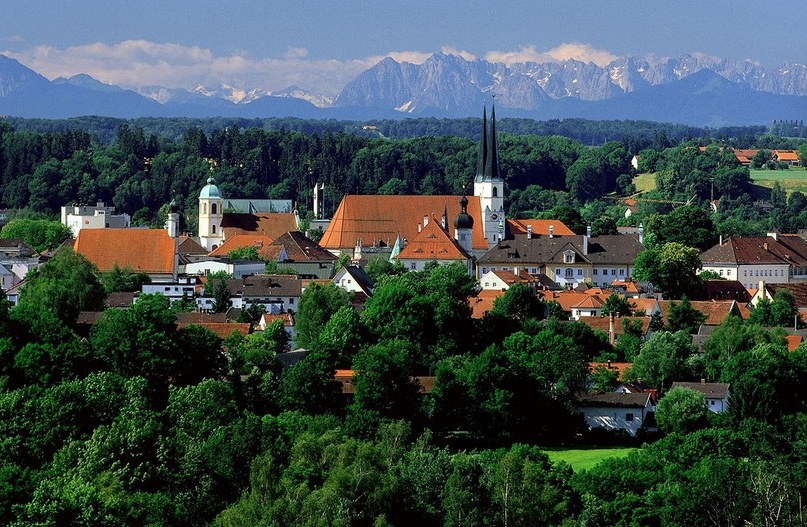
xx
COMMENT
Kino experienced the power of pilgrimage when he ministered to pilgrims as a newly ordained priest at the great European pilgrimage center in Altotting, Germany at the church named in honor of Saint Mary Magdalene. The beautiful photograph is of Altotting with the nearby Alps on the German-Austrian border in the background.
Comment
Finding Kino - 60th Anniversary #9
June 7, 2026
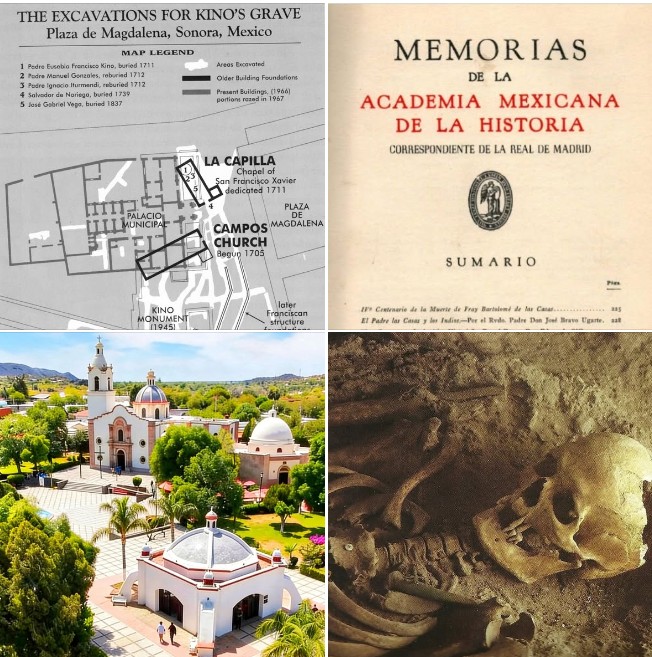
xx
FINDING KINO - 60TH ANNIVERSARY #10 - JULY 14, 1966 - THE ACADEMIA MEXICANA DE LA HISTORIA (MEXICO’S ACADEMY OF HISTORY), AFTER ITS REVIEW OF OVERWHELMING EVIDENCE, PRONOUNCED ITS CONFIRMATION AND SUPPORT OF THE POSITIVE IDENTIFICATION OF PADRE KINO’S SKELETAL REMAINS THAT WERE DISCOVERED BY AN INTERNATIONAL TEAM OF ARCHEOLOGISTS AND HISTORIANS IN MAGDALENA IN MAY, 1966.
The Academia Mexicana de la Historia (AMH) (Mexico’s Academy of History) pronounced its support for the identification of Padre Kino’s skeletal remains after the discovery of Kino’s grave in Magdalena in May 1966. AMH president Dr. Alfonso Caso y Andrade, the great Mesoamerican archeologist, proclaimed on July 14, 1966, in the name of The Academia Mexicana de la Historia, that Padre Kino’s remains had been positively identified as announced on May 24, 1966, by an international team of scholars and cronistas that included archeologists, physical anthropologists and historians from Mexico's Instituto Nacional de Antropología e Historia (INAH) and the University of Arizona.
Professor Wiberto Jimenez Moreno, the leader of the Kino grave discovery team and the head of Historical Research at INAH, presented voluminous and irrefutable evidence that supported the identity of the skeletal remains as those of Kino.
Part of the overwhelming evidence was the fact that Kino's skeletal remains were found within the excavated foundations of the San Xavier Chapel and precisely at a location where the church burial registry recorded the site of Kino’s grave. The 1711 record documented that Kino was buried “on the Gospel side” between the "second and third ashlars" (second and third foundation stones) of the chapel (Excavation Map Burial 1 - see upper left image).
Also within the excavated foundations of the San Xavier Chapel, two secondary burials were found at the locations that the church burial registry documented. The two secondary burials were of Kino’s fellow Jesuit missionaries, Padre Gonzalez (Excavation Map Burial 2) and Padre Iturmendi (Excavation Map Burial 3). One year after Kino’s burial, remains of Kino's fellow Jesuits were disinterred from Tubutama, transported to Magdalena, and then reburied in small rectangular wooden boxes on either side of Kino’s grave. The Excavation Map shows the locations of the 5 key burials within the San Xavier Chapel that correspond to the location descriptions in the burial registry records.
Much more evidence was submitted by Professor Wiberto Jimenez Moreno. AMH reviewed copies of documents from the Spanish colonial to the modern eras, paintings, drawings, photographs and topographical surveys. Also submitted were 72 affidavits, or formal written statements, explaining factual basis and the methodology used to find Kino's grave.
The cropped photograph of the upper part of Kino’s skeleton (bottom right image) was taken by astronomer and pioneer planetary scientist Dr. William K. Hartmann immediately after the discovery of Kino’s grave. Kino's small crucifix is located on the collar bone just right of his cassock button. The cassock button is on Kino's upper sternum. Dr. Hartmann, in addition to being a renowned planetary science researcher, has authored several books on the history and natural environment of the US-Mexico Borderlands.
In the COMMENTS is another photograph of Kino skeleton with a close up of his thorax or chest area. Kino’s small crucifix and cassock button are clearly seen.
The site where Kino's grave was discovered is now protected in a mausoleum where his skeletal remains are displayed and is located in La Plaza Monumental Padre Eusebio Francisco Kino in Magdalena de Kino (bottom left image). The Kino Plaza Monumental is designated by the federal government of Mexico as a national monument. Kino is named by the federal government as a "Hero of Mexico." Every year communities throughout Sonora and Arizona celebrate the May 1966 grave discovery. The celebrations center on Magdalena de Kino where the annual Kino Festival has been held for almost 30 years. The 4 day Kino Festival in Magdalena is the 2nd largest cultural event in Sonora and features theater, music and dance with talks, workshops and art.
The Academia Mexicana de la Historia (AMH) is a non-profit institution founded in 1919, that is dedicated to rigorous academic research, and the preservation and promotion of Mexico's cultural and historical heritage. AMH’s members are composed of 30 nominated members from Mexico together with corresponding members that include regional correspondents throughout Mexico, emeritia and honorary members and international fellows.
AMH hosts many conferences and educational programs during the year. More than 100 lectures per year are posted online for free public viewing. Also the new research of its members is published in AMH's official journal, “Memorias de la Academia Mexicana de la Historia” (upper right image). AMH is headquartered in a historic building in the Centro Histórico of Mexico City that was built in the early 1700s.
There are currently 64 international fellows. The United States has 21 international fellows including Dr. Cynthia Radding, of the University of North Carolina, Chapel Hill. Dr. Radding also serves as a member of AMH’s editorial board.
More about The Academia Mexicana de la Historia (AMH) at its website at https://acadmexhistoria.org.mx/.
[see comment below]
Finding Kino - 60th Anniversary #10
July 14, 2026
https://www.facebook.com/eusebio.kino.56/posts/pfbid0rcrohgR79hKcatSSAugDmDELVgi8VDMhtQnyoQ5UFiLzukPvpKzmR4Me44TFKdcl
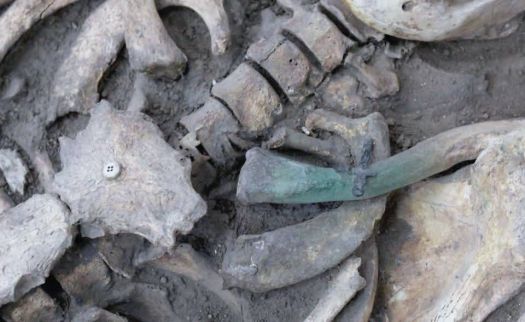
xx
COMMENT
FINDING KINO - 60TH ANNIVERSARY #10 - Photograph of thorax or chest area of the skeleton of Eusebio Francisco Kino. On May 19, 1966, an international team of scholars and cronistas including archeologists, physical anthropologists and historians from Mexico's INAH and the University of Arizona found Padre Kino’s grave with his skeletal remains in Magdalena, Sonora. On July 14, 1966, the Mexican Academy of History confirmed the discovery of Kino’s skeletal remains as that of Kino’s.
Kino’s coffin was mostly gone, but a simple cassock button remained on Kino’s breastbone and a small Jesuit crucifix of the 17th century lay on his collarbone.
Further examination of Kino’s skeleton revealed a European male who was at least 60 years old. Kino died at age 66. The skull was a classic European type from the region of the Alps. Kino was born in today’s Italian Alps. The skeleton showed signs of arthritis. Kino had trouble horseback riding and writing in his later years. The tibia bones of the legs showed a pronounced retroflexion. This was characteristic of people of Kino’s homeland.
Comment
Finding Kino #10 - 60th Anniversary
July 14, 2026
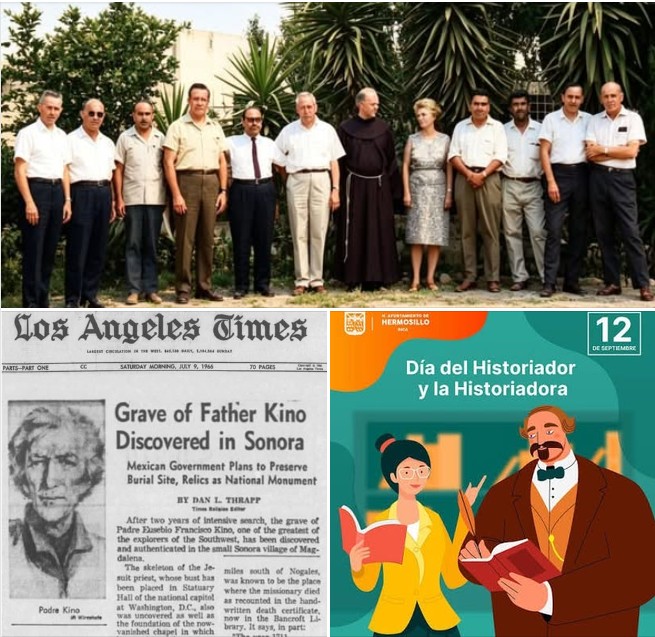
xxx
FINDING KINO - 60TH ANNIVERSARY # 11 - REMEMBERING CRONISTA JUANITA RUIZ ON DÍA DEL HISTORIADOR - THE ONLY HISTORIADORA ON THE KINO GRAVE DISCOVERY TEAM. JUANITA’S NOTES AND IMAGES ABOUT THE DISCOVERY AND ITS TEAM ARE ARCHIVED IN THE HUNTINGTON MUSEUM. SHE WAS THE MAIN CONTRIBUTOR TO THE ARTICLE BY THE LOS ANGELES TIMES THAT IS SET OUT AT THE BOTTOM OF THE POST.
On the September 12th anniversary of the Día del Historiador, we honor both those who study history as their profession and those community historians (cronistas) who study history as their avocation. As part of this year’s 60th anniversary celebration of the finding of Padre Kino’s grave, we remember the many cronistas and others interested in history who gave invaluable help to the Kino grave discovery team that was made up of professional archeologists and Spanish colonial historians. Team member Jorge Olvera acknowledged their help in his book about the grave discovery when he wrote, “Persons like Juanita Ruiz, who helped us constantly for almost a year, deserve our greatest gratitude and permanent praise.”
Like Jorge Olvera, I am putting the spotlight on Juanita Ruiz (1918-2006). She was among the multitude of people who helped find Kino. In the top photograph, we see that the Kino international team of archeologists and historians honored Juanita Ruiz by including her in the team photo. To identify the individuals in the photograph and their roles in the grave discovery, see the COMMENTS below with the original black and white photograph attached. The original photograph was taken by Magdalena photographer Samuel Arreola who documented the search and its excavations. Francisco Xavier Flores Silver of Magdalena used color enhancement of the top photograph with the permission of the Arreola Valle family. Thank you Francisco.
The Día del Historiador (bottom right image) commemorates the September 12, 1919, founding of The Academia Mexicana de la Historia (AMH) (Mexico’s Academy of History). AMH is a non-profit institution that is dedicated to rigorous academic research, and the preservation and promotion of Mexico's cultural and historical heritage. Two months after the Kino grave discovery, AMH pronounced its support for the positive identification of Padre Kino’s skeletal remains in Magdalena.
SONORAN CRONISTA JUANITA RUIZ (1918-2006)
Although she was born in Morenci, Arizona, and resided in San Gabriel, California when she was in the United States, Juanita Ruiz was a great Sonoran cronista. She was very knowledgeable about the history and archaeology of the state Sonora and helped preserve its history in her writings and photographs.
Juanita first met the Kino discovery team in August 1965, when they traveled to Caborca to searched for the original 1864 water color painting by J. Ross Browne of the Magdalena central plaza. This painting helped the team find the location of the buried foundations of the San Xaiver Chapel where Padre Kino was buried in 1711. During the second excavation season starting in April 1966, Juanita stayed in Magdalena with the team and was there when Kino’s skeletal remains were discovered in late May. She took dozens of photographs, drew diagrams, and kept a field notebook that recorded events as the excavations progressed. In 1975, she donated these materials to the Huntington Museum in San Marino, California.
The Huntington permanent record link to Juanita’s archival materials about the Kino grave discovery is at https://catalog.huntington.org/record=b1899398. Also the Huntington Museum has in its archives many of the original letters that Kino wrote to the great woman of the Renaissance, Maria de Guadalupe de Lencastre, 6th Duchess of Aveiro. For more about the letters and the Duchess, see https://www.padrekino.com/index.php/khs_home/kino-life/letters-duchess-averio.
Several weeks after the grave discovery, Juanita was the main contributor to the Los Angeles Times article published on July 9, 1966 - “Grave of Father Kino Discovered in Sonora: Mexican Government Plans To Preserve Burial Site, Relics As National Monument”. In the article Juanita’s interview was featured. Also published were her photographs and her diagram showing locations of the foundations of the Kino Chapel and Campos Church and the existing City Hall. The entire text of the article is set out at the end of this post.
Please Note: the left bottom image combines the mast head of the LA Times with the beginning of the main Kino story that appeared in Part III page 5 of the Saturday edition. Not shown in the image is the part of the front page in the bottom left corner that was a summary of the Kino article with the headline “Grave of Explorer Padre Kino Located.” The summary referred the reader to the main story inside the newspaper. The entire text of the front page summary is set out at the end of this post.
Later in 1966, Juanita preserved history from another era. She wrote an article for the journal of the Arizona Historical Society entitled “The Watch of Henry A. Crabb” The Journal of Arizona History, Vol. 7, No. 3 (AUTUMN, 1966), pp. 139-142 (5 pages). The article is online at https://www.jstor.org/stable/41695370. The article also contained Juanita’s photograph of the watch. Crabb led a group of “filibusters” from the United States who invaded Sonora and met their deaths at the hands of the people of Caborca who defended their homes and country from them.
Juanita contributed a photograph from her library of photographs of Sonora, for a Tucson Citizen newspaper article about the mission church of San Diego de Pitiquito, Sonora. The 1967 article was about the uncovering of a mural drawing of an 8 foot skeleton with a biblical inscription on a interior church column after the church’s fresco walls where cleaned. Jorge Olvera was interviewed for the article.
______________________________
“PERSONS LIKE JUANITA RUIZ, WHO HELPED US CONSTANTLY FOR ALMOST A
YEAR, DESERVE OUR GREATEST GRATITUDE AND PERMANENT PRAISE.”
JORGE OLVERA
In his book "Finding Father Kino, The Discovery of the Remains of Father Eusebio Francisco Kino 1965-1966,” Jorge Olvera gives credit to the many cronistas and others, both in Mexico and the United States, who gave invaluable help to the discovery team in finding Kino’s grave.
What follows is an excerpt from Jorge’s book. It is one example of the help that the people of Magdalena gave to the discovery team and led to Juanita participating in the search. Paintings, drawings, photographs and oral testimonies were given. These were instrumental in finding Kino’s grave.
Olvera writes:
“When the photograph arrived, which was almost instantly (the family who owned it must have lived very near the main plaza of Magdalena), I saw it was not a photograph of the village, but a photograph of a watercolor sketch, one signed by an American artist, J. Ross Browne. ... The person who brought the photograph said I could keep it. Then someone else told me that in a restaurant at the Motel Amelia [now Hotel Posada del Desierto] in Caborca there was another old painting similar to the one in the photograph. ...
“When we arrived in Caborca, we went directly to the Amelia restaurant. There, Juanita Ruiz, the owner or manager of the restaurant, showed us the painting. This proved to be another great surprise, as the painting turned out to be the original watercolor painted by J. Ross Browne! It was identical to the image in the small photograph we had seen in Magdalena. ... Later on I had the original photographed once again through the courtesy and graciousness of Juanita Ruiz and had two enlargements made, one of them for Professor Jiménez Moreno's files.”
“From that moment on, Juanita Ruiz became very much interested in our research. ... Juanita Ruiz became so involved in our project that nine months later we gave her a letter requesting she be given help with research on our behalf in the Huntington Library in San Marino, California. The letter, dated May 16, 1966, was signed by the members of our team, Professor Wigberto Jimenez Moreno, Professor Arturo Romano, Dr. William Wasley, and myself. It read: "The bearer of this letter, Mrs. Juanita Ruiz, already has permission to do research in your division of the library. We would appreciate it immensely if you could also assist her in finding any materials in your collections which might have some bearing on Father Kino and his burial place in Magdalena, Sonora, Mexico. Persons like Juanita Ruiz, who helped us constantly for almost a year, deserve our greatest gratitude and permanent praise.”
Jorge Olvera H.
"Finding Father Kino
The Discovery of the Remains of Father Eusebio Francisco Kino 1965-1966”
Pages 45-47
______________________________
LA TIMES KINO ARTICLE - TEXT
JULY 9, 1966
[Juanita Ruiz was the feature interview and she contributed her photographs and diagrams for the article]
[FRONT PAGE SUMMARY- lower left corner]
[headlines]
Grave of Explorer
Padre Kino Located
[beginning front page text]
The grave of Padre Eusebio Francisco Kino, one of the greatest explorers in the Southwest, has been discovered by archeologists in the small Sonora village of Magdaelana.
The Jesuit priest, who died in 1711, founded many missions in southern Arizona and northern Sonora and was the first to learn that Lower California was not a island.
The full story of this unusual archeological discovery in on Page 5, Part II.
[end front page text]
[PART III PAGE 5 MAIN ARTICLE
[headlines]
Grave Of Father Kino
Discovered In Sonora
Mexican Government Plans To Preserve
Burial Site, Relics As National Monument
[beginning article text]
BY DAN L. THRAPP
Times Religion Editor
After two years of intensive search, the grave of Padre Eusebio Francisco Kino, one of the greatest of the explorers of the Southwest, has been discovered and authenticated in the small Sonora village of Magdalena.
The skeleton of the Jesuit priest, whose bust has been placed in Statuary Hall of the national capitol at Washington, D.C., also was uncovered as well as the foundation of the now vanished chapel in which he was interred.
Father Kino discovered the Gila River, and for all practical purposes the lower Colorado River as well, and he was the first to learn that Lower California was not an island as had been thought.
Founded Early Missions [subhead line]
He founded and developed many of the first missions in what is now southern Arizona and northern Sonora, and he compiled maps that were astonishing for their accuracy and detail.
Italian born and German-educated, Father Kino was scientifically minded and mathematically inclined. He arrived in the New World in 1681.
He died in 1711. The chapel in which he was buried had crumbled away and all traces of the grave had disappeared before it was rediscovered May 24 at Magdalena.
Magdalena, a community of about 4,000 some 60 miles south of Nogales, was known to be the place where the missionary died as recounted in the handwritten death certificate, now in the Bancroft Library. It says, in part:
"The year 1711. On the fifteenth of March, a little after midnight, Fr. Eusebio Francisco Kino died with great peace and edification in this house and pueblo of Santa Magdalena at the age of seventy years (he was really 67) ...
"And now, resting in the Lord, he is buried in a coffin in this chapel of San Francisco Xavier on the Gospel side where fall the second and third choir seats.
“Agustin de Campos."
Serving jointly as an apostle of the Roman Catholic Church, and as an envoy of the Spanish crown, Father Kino had spent 24 years in the Southwest, from 1687 to 1711, establishing missions among the Indians of what was then called "Pimeria Alta."
Introduced Ranching [subhead line]
He not only began missions or settlements at many places, some of which exist to this day, but introduced ranching with cattle and other livestock and everywhere continued studying, mapping, exploring.
One of the settlements he began, which is now a National Monument, was Tumacacori, south of Tucson.
Over the years, searches for his grave had proven fruitless, largely because all trace of the chapel in which he was buried had vanished.
Dr. Herbert E. Bolton, famed historian of the Southwest, was devoted until the day of his death in 1952 to locating the grave. A dozen years ago ruins were uncovered at Magdalena which were thought to be those of the chapel, but this proved not to be.
Then last year a new archaeological team began the search, spurred perhaps by the discovery three years ago of the grave of Juan Bautista de Anza (founder of San Francisco in 1776) in a church at Arizpe, not too far from Magdalena.
Work the first year was inconclusive although careful studies had charted the location where
Please Turn to Pg. 7, Col. 1 - Continued from 5th Page
ruins of the chapel must certainly be found.
This year the hunt got under way April 29, according to Mrs. Juanita Ruiz, 5013 N. Bartlett St., San Gabriel, for many years an aficionado of the history and archaeology of Sonora.
"I happened to be there when work commenced this year, and I remained there every day until the discovery was made," she said.
Always Underfoot [subhead line]
"I guess I was always underfoot. But the scientists came to tolerate me."
She took dozens of photographs and drew charts of the progress of the excavations, and kept a field notebook, recording in it measurements, names, discoveries and everything bearing on the search.
The work was done under joint sponsorship of the government of Sonora and the federal government of Mexico and it was carried out under scientists of the Instituto Nacional de Anthropologia e Historia de Mexico, with Dr. Wigberto Jimenez Moreno, director, in charge.
Dr. Arturo Romano, a physical anthropologist, too, was there. He had been in on the discovery of Anza's remains at Arizpe. Also present was Dr. William Wasley, of the University of Arizona Museum.
College Ruins Found [subhead line]
First to be discovered were ruins of a Franciscan college, dating from the latter 18th century. They were directly in front of the present-day church, and searchers were confident that beyond them they would find traces of the chapel.
So it proved.
Graves of two fathers buried beside Kino were found. They were those of Father Iturmendi and Father Gonzalez, both interred in 1712.
Then the discovery of the great missionary-explorer was made the complete skull and skeleton and traces of the pine coffin in which he had been buried.
Identification was made by minute and professional examination of the skull, by the nature of the bones, which showed that they belonged to a man of about Kino's age at death, who had long suffered from arthritis, as had Kino, and from a small Jesuit cross on his chest - a cross given to Jesuit missionaries of that day when they set out for mission lands.
The remains were also identified by their location in what had been the chapel, exactly as the death certificate had stated.
The chapel had been 6.6 meters long, 5 meters wide and the foundation walls extended 1.5 meters below the surface, Mrs. Ruiz said.
National Monument [subhead line]
Others taking part in the final month of search included, in addition to the 40 workmen involved, the Rev. Kieran McCarthy, O.F.M. of Santa Barbara; J. Cruz Acuña, of Hermosillo, Sonora, and Prof. Jorge Olvera, an anthropologist of the Mexican anthropological institute.
Having been authenticated by experts, the block-square area where the chapel stood and the relics are being acquired by the federal government of Mexico to be set aside as a national Monument, said Mrs. Ruiz.
A modern monument to Father Kino, erected about 1945, already stands near the site, she said, but an additional suitable memorial no doubt will be erected. Plans are also under way, she added, to reconstruct, as nearly as may be done, the chapel of San Francisco Xavier.
Unfortunately no one knows exactly how it appeared when standing. The earliest picture known to exist of it is in John Russell Bartlett's two volume "Personal Narrative of Explorations and Incidents Connected with the United States and Mexican Boundary Commission," published in 1854 .
However, the chapel there appears as a tiny structure in the background of the town of Magdalena.
With rather complete knowledge of how chapels were built in the early 18th century, however plus the outline of the foundation walls still existing, authorities believe they can fairly well reconstruct the historic Chapel of San Francisco Xavier.
[end article text]
The Los Angeles Times' article was written by the Los Angeles Times religion editor Dan L. Thrapp (1913-1994). Later Dan would become a pre-eminent historian of the American West. Dan would write the four-volume “Encyclopedia of Frontier Biography” and author several books about the United States-Mexico Borderlands.
Please Note: the left bottom image combines in one image the mast head of the LA Times with the beginning of Kino story that appeared in inside pages. There was a summary of the Kino story on the front page that then referred the reader to the main story in the inside pages.
[see comment below]
Finding Kino - 60th Anniversary #11
September 10, 2026
https://www.facebook.com/eusebio.kino.56/posts/pfbid0yiUgigd4638SYf7Y6tJHtpQEqRsQYyCV4zLMcBajJD16cJpzipeHVw7oHVaz7Dqel
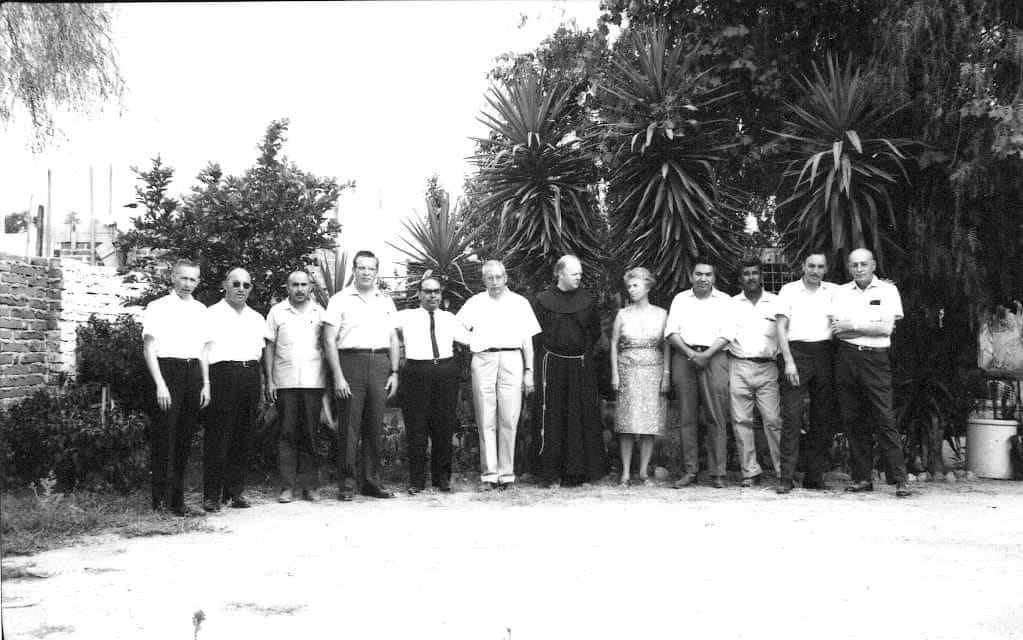
COMMENT
The photograph shows the Kino Grave Discovery Team with others members of the team after the Kino grave discovery. From Left to Right: Dr. Walter H. Birkby, physical anthropologist and forensic scientist, University of Arizona, who after the discovery helped Dr. Romano Pacheco preserve the Kino skeleton and grave site; Discovery Team Members: Dr. William W. Wasley, archaeologist, University of Arizona, wearing sunglasses; Dr. Jorge Olvera H., art historian and ethnohistorian and archaeologist, Mexico’s Instituto Nacional de Antropología e Historia (INAH); Dr Arturo Romano Pacheco, physical anthropologist, archaeologist and forensic scientist, Director of the Department of Physical Anthropology INAH; Gerardo Nava Garcia, Mayor of Magdalena; Dr. Wiberto Jiménez Moreno, anthropologist and ethnohistorian, Director of Historical Research INAH and Kino discovery project leader; Rev. Kieran R. McCarty, O.P.M., one the team historians and Franciscan pastor of the chain of Kino mission churches in the Altar River Valley and later pastor at Mission San Xavier del Bac in Tucson; Juanita Ruíz, Sonora cronista, who stayed with the discovery team during their second excavation season. In the Los Angeles Times article about the Kino grave discovery (July 9, 1966), Juanita was the featured interview and supplied photographs and drawings; and Gabriel Sánchez de la Vega, Magdalena cronista and team member. Remainder of the people pictured are unidentified. Other team members not identified or not shown include Reverend Cruz Acuña. Picture by Magdalena photographer Samuel Arreola.
Comment
Finding Kino - 60th Anniversary #11
September 10, 2026
Magdalena DeKino
Sonora's Daily Digital Magazine
Facebook: https://www.facebook.com/profile.php?id=61565401378901
Magdalena DeKino, Sonora's Daily Digital Magazine, Recommends
The Finding Kino Facebook Blog Series To Its Readers.
ENCONTRANDO EL KINO 60º ANIVERSARIO Sigan esta página tiene información concreta y detallada Eusebio Kino
- 14 DE JULIO DE 1966 - LA ACADEMIA MEXICANA DE LA HISTORIA (ACADEMIA MEXICANA DE LA HISTORIA) pronunció su apoyo a la identificación de los restos óseos de Padre Kino después de la revisión de las pruebas sobresalientes, confirmando su identificación positiva. El presidente de la Academia Mexicana de la Historia, el gran arqueólogo mesoamericano, proclamó el 14 de julio de 1966, en nombre de la Academia Mexicana de la Historia, que los restos de Padre Kino habían sido identificados positivamente, anunciado el 24 de mayo de 1966, por un equipo internacional de investigadores y cronistas que incluyeron arqueólogos, antropólogos físicos y historiadores del Instituto Nacional de Antropología e Historia (INAH) y la Universidad de Arizona.
Magdalena DeKino
July 15, 2026
https://www.facebook.com/permalink.php?story_fbid=pfbid0ovtAPirAjzX77keREVbAwJaXNq9dcUXBb821KaER2SkTvxoksmBxzEJnpeDbCGrZl&id=61565401378901
Editor Note: Since 2005, Sonora's digital magazine Magdalena DeKino (https://www.facebook.com/profile.php?id=61565401378901) presents daily feature stories about the news, culture, natural environment and gastronomy of the community of Magdalena de Kino and the rest of the State of Sonora.
Thank you Magdalena DeKino for recommending to your readers the Finding Kino - 60th Anniversary Facebook blog series. "ENCONTRANDO EL KINO 60º ANIVERSARIO Sigan esta página tiene información concreta y detallada Eusebio Kino" [FINDING KINO 60th ANNIVERSARY Follow this page; it features concrete and detailed information about Eusebio Kino]
Shared and Other Facebook Posts During 60th Anniversary Celebrations
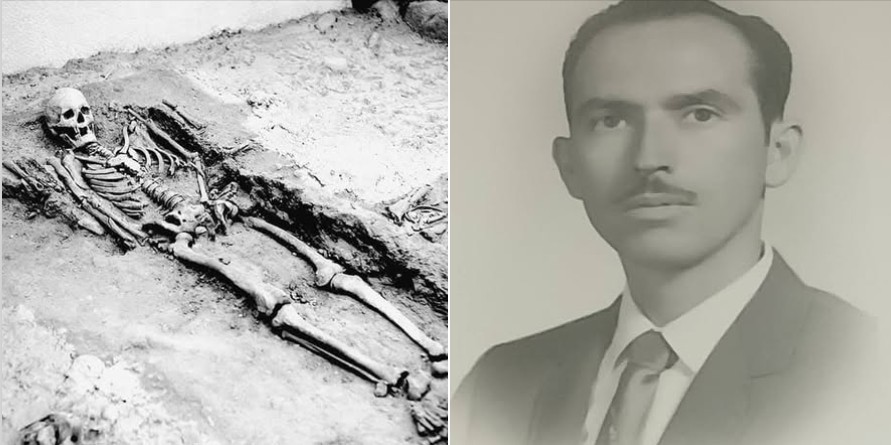
xx
MAGDALENA DE KINO: UN NOMBRE QUE HONRA LA HISTORIA
Un 26 de junio de 1968, nuestro querido pueblo vivió un momento que marcaría para siempre su identidad. A través de la Ley No. 29 del Estado de Sonora, se decretó el cambio de nombre de la cabecera municipal: dejaba de llamarse solamente Magdalena para convertirse oficialmente en Magdalena de Kino.
Esta decisión fue tomada con un solo propósito: honrar la memoria del venerable padre jesuita Eusebio Francisco Kino, quien con su fe, su ciencia y su amor por estas tierras, dejó una huella profunda en nuestra historia.
El decreto fue firmado durante el gobierno del Lic. Faustino Félix Serna, siendo Manuel Félix Castro presidente municipal en aquel entonces. Ambos coincidieron en que el legado del padre Kino merecía ser recordado no solo en los libros, sino también en el propio nombre de esta tierra que tanto amó y donde s encuentran sus restos mortales.
Desde entonces, llevamos su apellido con orgullo. Porque Magdalena de Kino no solo es un nombre: es un testimonio vivo de gratitud, identidad y memoria histórica.
Para que la historia no se olvide, para que el nombre de Kino siga vivo en el corazón de Sonora
Viva el padre Kino ...
Efemérides Magdalenenses
Raul A. Millán.
Cesar Arturo Andrade's Post
June 24, 2025
https://www.facebook.com/cesararturo.andrade.5/posts/pfbid0K246qnhcp6qpNnuEL26CDqZtsGdm8dR9Ee2ewDxPLVtxwicfHLNGoT8JuNcnvKJZl
GOOGLE ENGLISH - TRANSLATION WORK IN PROGRESS
SHARED POST ABOVE ORIGINALLY IN SPANISH
MAGDALENA DE KINO: A NAME THAT HONORS HISTORY
On June 26, 1968, our beloved town experienced a moment that would forever shape its identity. By State of Sonora Law No. 29, a decree was issued to change the name of the municipal seat: it ceased to be known simply as Magdalena and officially became Magdalena de Kino.
This decision was made with a single purpose: to honor the memory of the venerable Jesuit Father Eusebio Francisco Kino, who—through his faith, his scholarship, and his love for this region—left a profound mark on our history.
The decree was signed during the administration of Faustino Félix Serna, with Manuel Félix Castro serving as municipal president at the time. Both agreed that Father Kino’s legacy deserved to be commemorated not only in books but also in the very name of the land he loved so dearly—the land where his mortal remains now rest.
Since then, we have borne his surname with pride. For Magdalena de Kino is more than just a name; it is a living testament to gratitude, identity, and historical memory.
So that history is not forgotten, and so that Kino’s name lives on in the heart of Sonora...
Long live Father Kino...
Efemérides Magdalenenses
Raúl A. Millán
Cesar Arturo Andrade's Post
June 24, 2025
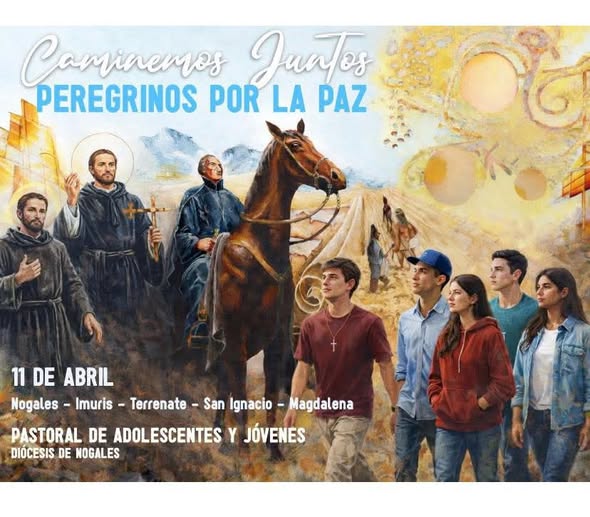
xx
Finding Father Kino Facebook Series - Celebrating The 60th Anniversary of Finding Padre Kino’s Grave and Skeletal Remains. Today around 100 young “Peregrinos Por la Paz” ("Pilgrims For Peace") will walk along the Magdalena River from Imuris to Magdalena de Kino. This walk is part of the longer pilgrimage trail from the U.S.-Mexico border community of Ambos Nogales to Magdalena de Kino. Magdalena de Kino is where Padre Kino’s skeletal remains are displayed at his grave site in a beautiful mausoleum that is a national monument of Mexico.
The mausoleum shelters the grave site that was discovered in May 1966 by an international team of scholars and local cronistas (historians). The Kino discovery team included archeologists, physical anthropologists and historians from Mexico's Instituto Nacional de Antropología e Historia (INAH) (National Institute of Anthropology and History), the Arizona State Museum in Tucson, Arizona, and the University of Arizona. On July 14, 1966, the Academy of History met in Mexico City and after reviewing the evidence, pronounced in favor of the identity of Padre Kino's remains.
The Peregrinos Por la Paz are led by Padre Claudio Murrieta who is vice-postulator of the Padre Kino’s sainthood cause. Padre Claudio is pastor of el señor de la misericordia en Nogales, Sonora. The pilgrims start at the Kino mission of San José in Imuris and continue on to the mission of San Ignacio de Cabórica. They will end their pilgrimage at the Kino mausoleum and be received by the municipal authorities of Magdalena de Kino at a ceremony that will include will include communal prayers for peace, stewardship of nature and sustainability of the earth.
The pilgrimage pays homage to Padre Kino who was tireless in his efforts to bring peace to the people of this region and whose legacy continues to inspire faith, history and identity. The pilgrimage honoring Padre Kino walked by Peregrinos Por la Paz is about 25 kilometers (15 miles) - the distance from Imuris to Magdalena de Kino.
Read online about the extraordinary history of the discovery of Padre Kino's grave. ...
[shared post below]
Eusebio Kino
Finding Kino - 60th Anniversary
April 12, 2026
https://www.facebook.com/eusebio.kino.56/posts/pfbid0WqLbobEHhWEmzYLKKEMAxWmXgpUTCfBTdRFcdkWi2VwB8YxzLx7xwaQ7xQjt2NCwl?viewas=100000686899395
SHARED POST
Cerca de un centenar de miembros de la Diócesis de Nogales, en su mayoría jóvenes, peregrinarán desde la misión de San José en Ímuris hasta la misión de San Ignacio de Cabórica, para finalmente llegar a la misión de Magdalena de Kino.
La peregrinación concluirá en la cripta–mausoleo donde descansan los restos del Padre Eusebio Francisco Kino, con el propósito de rendir homenaje al “caminante del desierto” y misionero incansable.
Este grupo, que se denomina “Peregrinos de la Paz”, liderados por el parroco de la parroquia el señor de la misericordia y vicepostulador de la causa por la Beatificación del Padre Eusebio Francisco Kino padre Claudio Murrieta , será recibido por autoridades municipales, quienes facilitarán el ingreso del contingente para la ceremonia, la cual incluirá oraciones comunitarias y elementos simbólicos de la naturaleza.
Este encuentro se realiza además dentro del marco del 60 aniversario del descubrimiento de los restos del Padre Kino, un acontecimiento que continúa inspirando la fe, la historia y la identidad de la región.
Shared Post
Cesar Arturo Andrade is in Magdalena de Kino, Mexico
Finding Kino - 60th Anniversary
April 11, 2026
https://www.facebook.com/cesararturo.andrade.5/posts/pfbid0xH6TeExpkvUF8WPrD549H2rqZK4gCT3jqFerQLhMpyhNmkMzMfEZX5hNUTz4coqSl
GOOGLE ENGLISH - TRANSLATION - WORK IN PROGRESS
SHARED POST ABOVE ORIGINALLY IN SPANISH
Nearly a hundred members of the Diocese of Nogales, mostly young, will pilgrimage from the mission of San Jose in Imuris to the mission of San Ignacio de Cabórica, to finally arrive at the mission of Magdalena de Kino.
The pilgrimage will conclude in the crypt-mausoleum where the remains of Father Eusebio Francisco Kino rest, with the purpose of paying tribute to the "desert walker" and tireless missionary.
This group, which is called "Pilgrims of Peace", led by the parish priest of the Lord of Mercy and vice-postulator of the cause for the Beatification of Father Eusebio Francisco Kino father Claudio Murrieta , will be received by municipal authorities, who will facilitate the entry of the contingent for the ceremony, which will include communal prayers and symbolic elements of nature.
This meeting also takes place within the framework of the 60th anniversary of the discovery of Father Kino's remains, an event that continues to inspire faith, history and identity of the region.
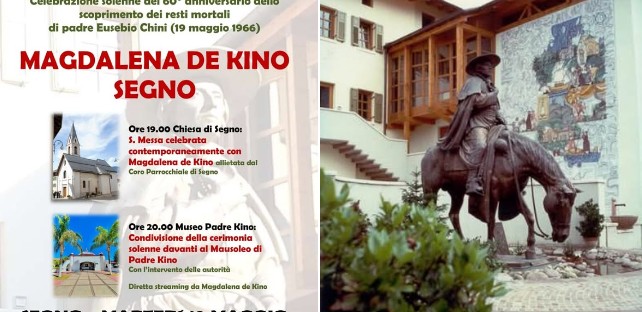
xx
An Excellent Post By Revista IHS About The History Of The Discovery of The Grave and Skeletal Remains of Padre Eusebio Francisco Kino, S.J. (1645-1711) in Magdalena de Kino, Sonora, Mexico on May 19, 1966. Today is the 60th Anniversary that was jointly celebrated via the internet by Magdalena de Kino, where Kino died and was buried and Segno, Italy where he was born.
Revista IHS is the Facebook username for the open source online academic journal and electronic book publisher about the history of the Jesuits in Ibero-Americas. The journal and book publication site is formally called "IHS: Antiguos Jesuitas en Iberoamérica." Revista IHS is written by journal editor Carlos A. Page, a historian and architect for CIECS-CONICET and faculty member of Universidad Nacional de Córdoba in Argentina. A co-editor of the journal is Dr. Gilberto López Castillo who is a professor and field historian / anthropologist for INAH Central-Sinaloa in Mexico. CIECS-CONICET (Center for Research and Studies on Culture and Society-National Council of Scientific and Technical Research) is an institute of the national government of Argentina: The website of "IHS: Antiguos Jesuitas en Iberoamérica" is at https://revistas.unc.edu.ar/index.php/ihs/about
Thank you Revista IHS.
[Shared Post Below]
Eusebio Kino
Finding Kino - 60th Anniversary
May 19, 2026
https://www.facebook.com/eusebio.kino.56/posts/pfbid0257xsKW2icYFn2CxerSSe6JaHfXX7q4WZ2Yfkkx21Wc4tWAvWS2wNBXpRFZn2w4BNl
SHARED POST
Conmemoración del 60.° Aniversario del Hallazgo
Conmemoración virtual y conjunta entre Segno (Italia), el pueblo natal del misionero jesuita Eusebio Francisco Kino, y Magdalena de Kino (México), el lugar de su fallecimiento, para celebrar el 60.° aniversario del descubrimiento de su tumba. Las actividades programadas incluyen una misa de acción de gracias en las iglesias de ambas localidades, seguida de ceremonias civiles en el Mausoleo de Kino en México y en el Museo y Centro Cultural Kino en Italia. Este hallazgo, ocurrido el 19 de mayo de 1966 y calificado como "milagroso" por el antropólogo Bernard L. Fontana, puso fin a décadas de búsquedas esporádicas iniciadas en 1922 por el obispo Juan Navarrete. El momento del descubrimiento fue registrado con profunda emoción por los miembros del equipo, quienes recordaron la calma de los cronistas locales y la sorpresa científica al constatar la veracidad del hallazgo, simbolizado por una pequeña cruz del siglo XVII sobre la clavícula del misionero.
Antecedentes y el Equipo de Investigación
El impulso definitivo para la búsqueda comenzó en febrero de 1965, tras la dedicatoria de una estatua de bronce del Padre Kino en el Capitolio de los Estados Unidos como representante del estado de Arizona. Ante este homenaje, el presidente mexicano Gustavo Díaz Ordaz encargó a la Secretaría de Educación Pública y al Instituto Nacional de Antropología e Historia (INAH) la localización e identificación fidedigna de los restos del jesuita. Bajo la dirección de Wigberto Jiménez Moreno, se conformó un equipo internacional e interdisciplinario integrado por destacados arqueólogos, antropólogos físicos, historiadores y cartógrafos, entre los que destacaron Jorge Olvera, Arturo Romano, Fernando Pesqueira, el arqueólogo estadounidense William W. Wasley y el historiador Kieran R. McCarty.
Datos Históricos y Trabajo de Campo
Las fuentes documentales indicaban que el Padre Kino había muerto a los 65 años el 15 de marzo de 1711, siendo sepultado en el lado del Evangelio del altar, entre los bloques de cimentación de la nueva capilla dedicada a San Francisco Javier. Los archivos también revelaron que posteriormente se realizaron otros enterramientos en el recinto, incluyendo los restos mezclados de dos jesuitas trasladados desde Tubutama y sepulturas civiles del siglo XVIII y XIX. Para localizar la estructura original, el equipo estudió las técnicas de construcción en adobe y piedra de otras misiones vecinas fundadas por Kino, como Remedios y Cocospera. La clave del éxito arqueológico radicó en la interpretación que hizo Jorge Olvera de tres ilustraciones del siglo XIX —realizadas por John Russell Bartlett, John Ross Browne y Alphonse Pinart—, las cuales permitieron ubicar espacialmente la antigua capilla jesuita en un área colindante con el palacio municipal de Magdalena.
El Hallazgo y el Legado Histórico
Al excavar en el lugar indicado, los arqueólogos hallaron los restos óseos exactamente en la posición descrita por las crónicas coloniales de 1711. El análisis antropológico forense confirmó que el esqueleto correspondía a un varón europeo de más de sesenta años con evidentes signos de artritis, patología coincidente con las dificultades documentadas que tuvo Kino para escribir y cabalgar en sus últimos años. Aunque el ataúd de madera se había desintegrado, se recuperaron un botón de sotana sobre el esternón y un pequeño crucifijo. Este trascendental descubrimiento transformó por completo la fisonomía y la identidad de la localidad, que pasó a llamarse oficialmente Magdalena de Kino, inaugurándose en la década de 1970 una gran plaza monumental y un mausoleo que resguarda los restos arqueológicos de la misión y el santuario del célebre evangelizador de la Pimería Alta.
Revista IHS
Shared Post
Finding Kino - 60th Anniversary
May 19, 2026
https://www.facebook.com/permalink.php?story_fbid=pfbid02gTWZrCnFAaK3nmZuBQwygeK4S7eUnmLoUqjgKqgPyH1zHuv5SJdvp2qTExNiRjEBl&id=100057954377746
GOOGLE ENGLISH - TRANSLATION WORK IN PROGRESS
SHARED POST ABOVE ORIGINALLY IN SPANISH
Commemoration of 60th Anniversary of the Finding
Virtual and joint commemoration between Segno (Italy), the hometown of the Jesuit missionary Eusebio Francisco Kino, and Magdalena de Kino (Mexico), the place of his death, to celebrate the 60th anniversary of the discovery of his grave. Scheduled activities include a Thanksgiving Mass in the churches of both towns, followed by civil ceremonies at the Mausoleum of Kino in Mexico and at the Museum and Cultural Center of Kino in Italy. This finding, occurred on May 19, 1966, was described as "miraculous" by anthropologist Bernard L. Fontana, put an end to decades of sporadic searches started in 1922 by Bishop Juan Navarrete. The moment of discovery was recorded with deep emotion by team members, who recalled the calmness of the local cronista and the scientific surprise at the authenticity of the finding, symbolized by a small 17th-century cross on the missionary's collarbone.
Background and the Research Team
The definitive impetus for the search began in February 1965, following the dedication of a bronze statue of Father Kino at the U.S. Capitol as Arizona's state representative. After this tribute, Mexican President Gustavo Diaz Ordaz commissioned the Secretariat of Public Education and the National Institute of Anthropology and History (INAH) to find the true location and identify the remains of the Jesuit. Under the direction of Wigberto Jiménez Moreno, an international and interdisciplinary team was formed consisting of prominent archaeologists, physical anthropologists, historians and cartographers, among whom stood out Jorge Olvera, Arturo Romano, Fernando Pesqueira, the American archaeologist William W. Wasley and historian Kieran R. McCarty.
Historical data and field work
Documentary sources indicated that Father Kino had died at the age of 65 on March 15, 1711, being buried on the side of the Gospel of the altar, between the foundation stone blocks of the new chapel dedicated to Saint Francisco Javier. The archives also revealed that other burials were subsequently carried out in the compound, including the mixed remains of two Jesuits moved from Tubutama and civilian graves from the 18th and 19th centuries. To locate the original structure, the team studied adobe and stone construction techniques from other neighboring missions founded by Kino, such as Remedios and Cocospera. The key to archaeological success was in the interpretation that Jorge Olvera made of three illustrations from the 19th century — made by John Russell Bartlett, John Ross Browne and Alphonse Pinart — which allowed the ancient Jesuit chapel to be located spacially in an area adjacent to the municipal palace of Magdalena.
The Finding and the Historical Legacy
When excavating at the specified location, archaeologists found the bone remains exactly in the position described in the colonial chronicles of 1711. The forensic anthropological analysis confirmed that the skeleton corresponded to a European male over sixty years old with obvious signs of arthritis, a pathology coinciding with the documented difficulties Kino had to write and ride in his later years. Although the wooden coffin had disintegrated, a casket button on the sternum and a small crucifix were recovered. This momentous discovery completely transformed town’s look physically look and its identity, which became officially called Magdalena de Kino, inaugurating in the 1970s a large monumental square and a mausoleum that preserves the archaeological remains of the mission and the sanctuary of the famous evangelizer of the Pimería Alta.
To Go To Kino Grave Discovery Site History (page1), click
Grave Discovery Site History Page
To Go Kino Grave Discovery Olvera Account (page 3), click
Grave Discovery Olvera Account Page
To Go To Magdalena de Kino - Trails Ends, click
Magdalena de Kino - Trails End Page